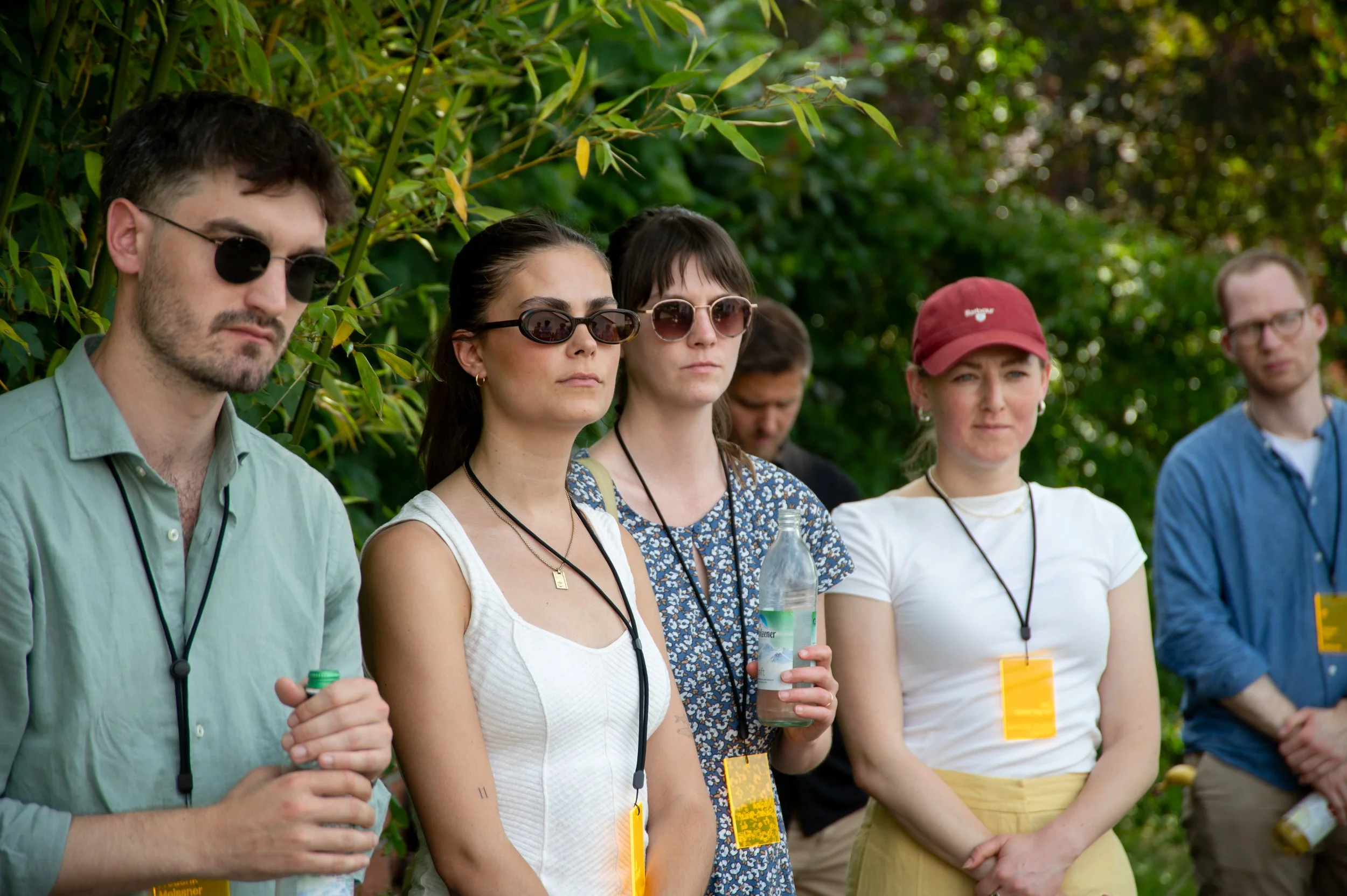
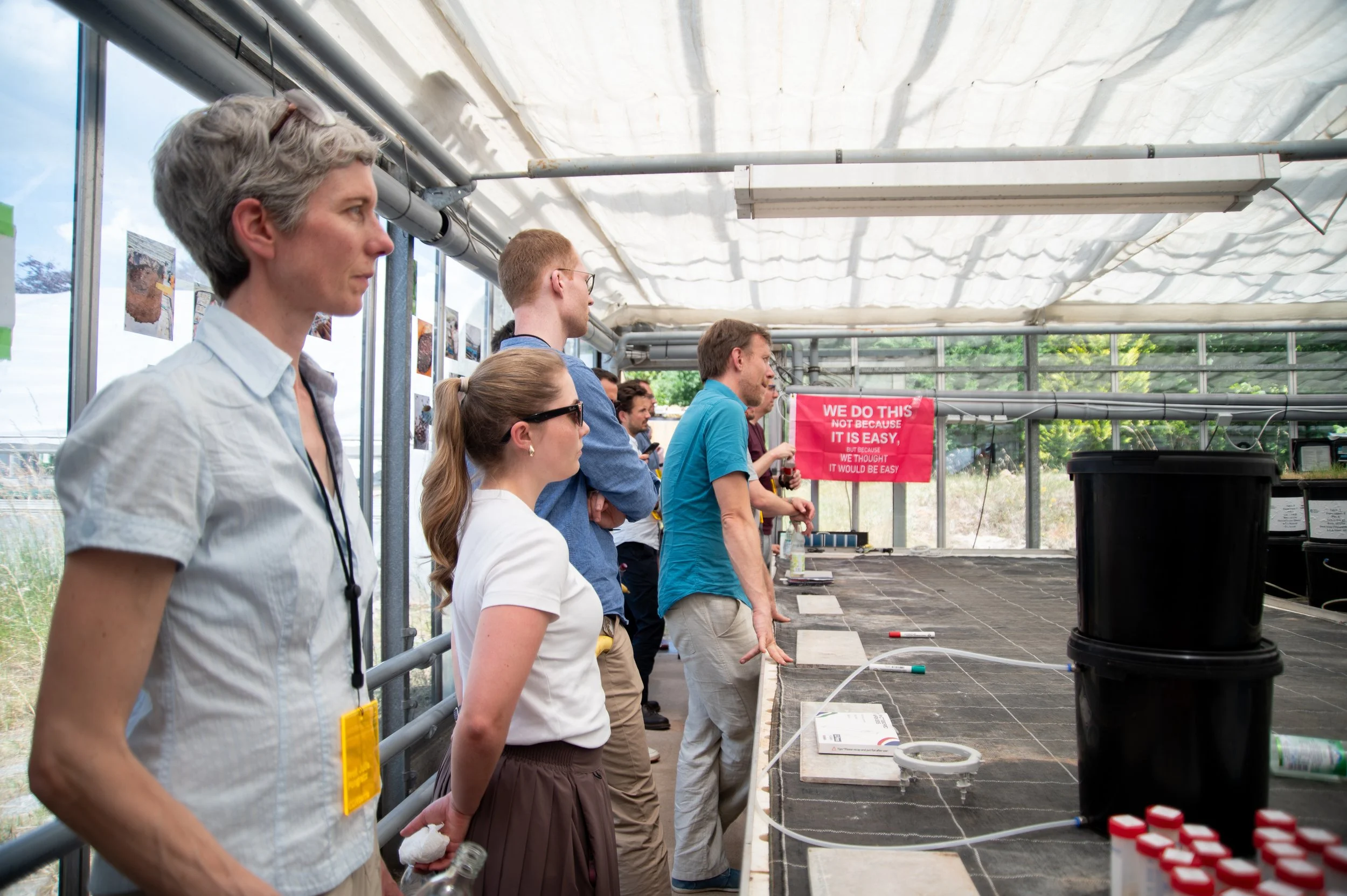
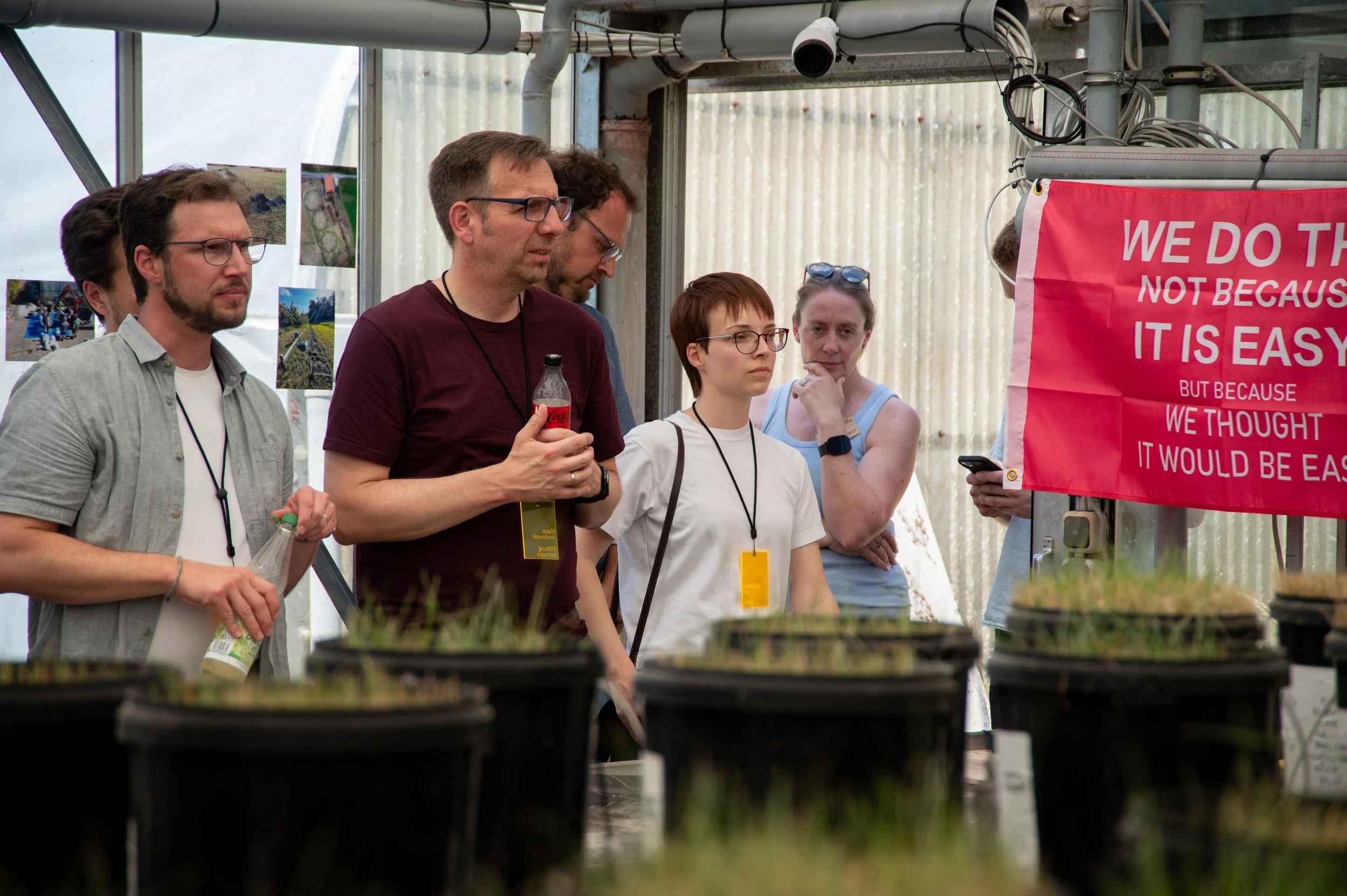
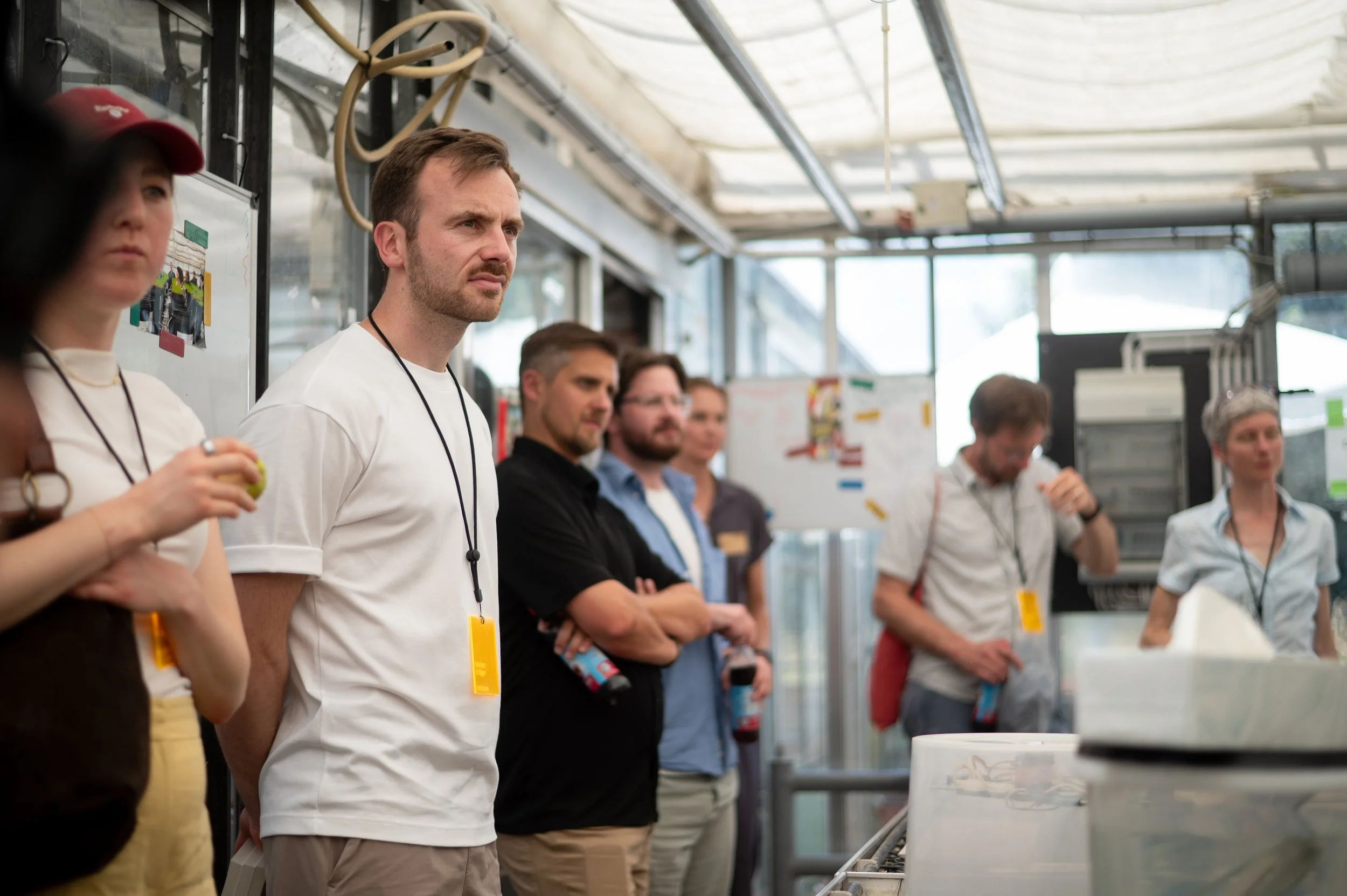
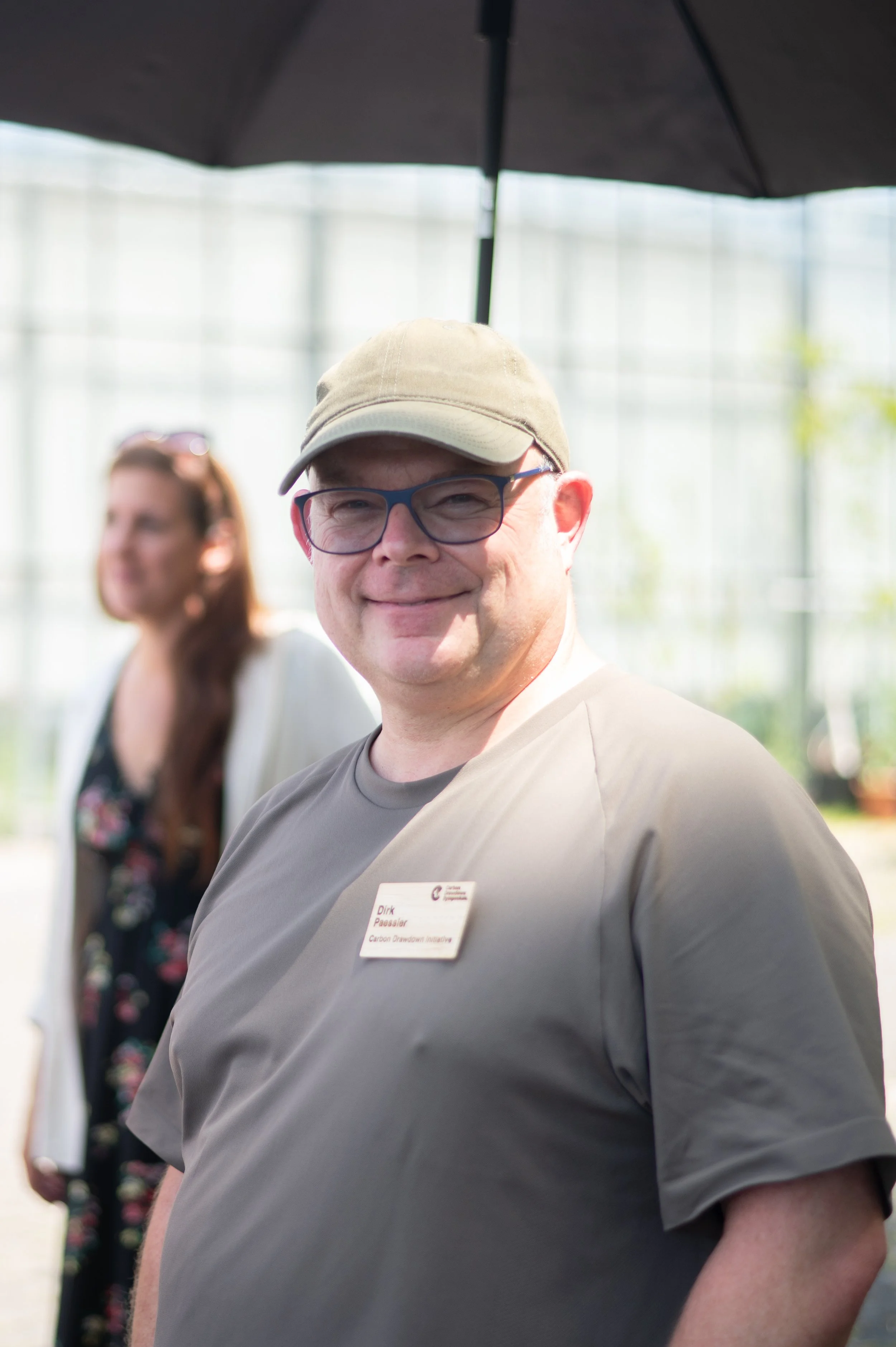
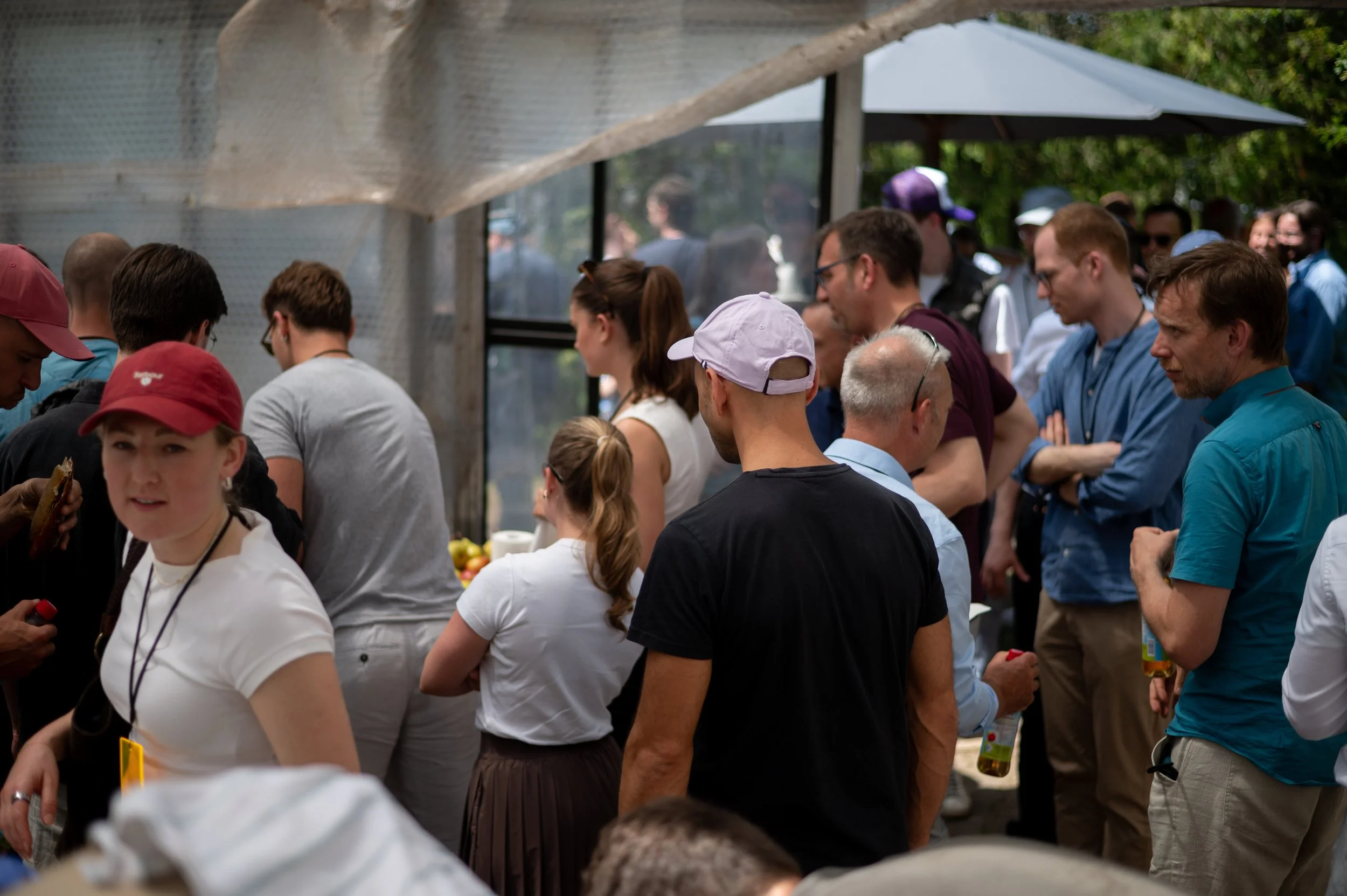
This is the welcome talk our CEO, Dirk Paessler, gave to our visitors when they visited our greenhouse experiment during the "CDR Experience Tour" on June 19th 2026, organized by German Association for Negative Emissions (DVNE). We are publishing it here for everyone who couldn't be there.
Es gibt auch eine Deutsche version.
Click here for the German version.
Welcome, everybody.
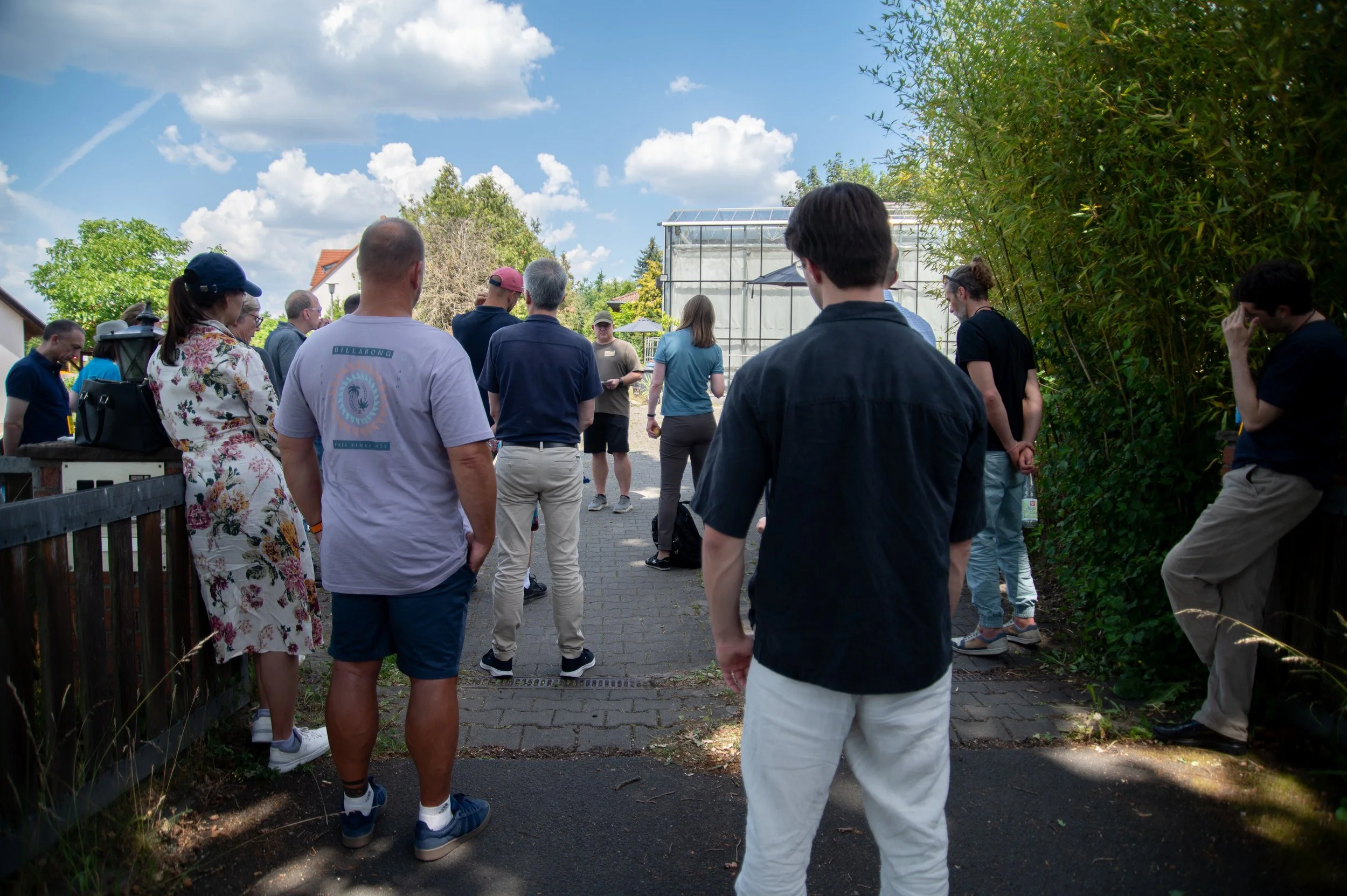
I'm Dirk Paessler, founder and CEO of Carbon Drawdown Initiative. I'm a lifelong software entrepreneur turned climate activist.
I'm not here to sell you anything today. What I want is to infect you with my enthusiasm for climate projects and climate companies — and make you my accomplices, so that together we can get our topics the public attention they deserve.
-----
We're facing enormous challenges. But those challenges are also enormous opportunities.
For me, this often feels like 1995, when I was convinced and excited about the internet, and a lot of people around me said: "Ah, Dirk, you do get excited quickly. But this won't ever be that big." We all know what came next.
In climate, and in CDR specifically, I see a strong wave coming — it's simply unavoidable. There are great opportunities here for the individual: academically, or to build a career. And for the entrepreneurial types who dare to step into these topics.
On a national level, climate and especially CDR are a big opportunity for Germany — for jobs, for economic growth, and for protecting the climate.
And we're actually off to a good start. We keep our own database of CDR companies worldwide. Just about 900 companies — “pure-play CDR” only, as we call them, not counting Airbus when they internally work on DAC with a few people — with more than 9,000 employees are working on this globally. 10 people per company means we are so super early in this journey!
Germany already ranks third, both in the number of companies and the number of publications, right after the UK and the USA. That's a good position. We should hold it and build on it.
-----
Let me tell you a bit about how I got here.
I've founded or co-founded more than a dozen companies. The most successful was Paessler AG — 500 employees, internet infrastructure software. Almost ten years ago I stepped out of the CEO role, and I asked myself one question: where can I be useful?
That question led me to climate, and then to the niche of CDR. Carbon Drawdown Initiative is a philanthropic project of our family foundation. We founded it in 2020, with a focus on nothing but CDR.
Our mission is to make negative emissions happen faster. And to do that, we push on three levers.
The first lever is impact capital. We give money to try out new ideas — pulling the important first steps a little bit out of the future and into the present. We provide super-early capital to CDR companies: over 30 investments in 14 countries around the world. That makes us the largest private CDR fund in the world (at least by count). All the important pathways are represented, among them darunter Climeworks, InPlanet, Octavia, Syncraft, plus the ecosystem enablers, like Carbonfuture.
The second lever is policy work. CDR is a bit like waste collection: without regulation, there will not be negative emissions at scale. Government involvement is indispensable. So we are co-founders of NEP, DVNE, and CRIA. And I've served as Vice Chairman of NEP since 2021.
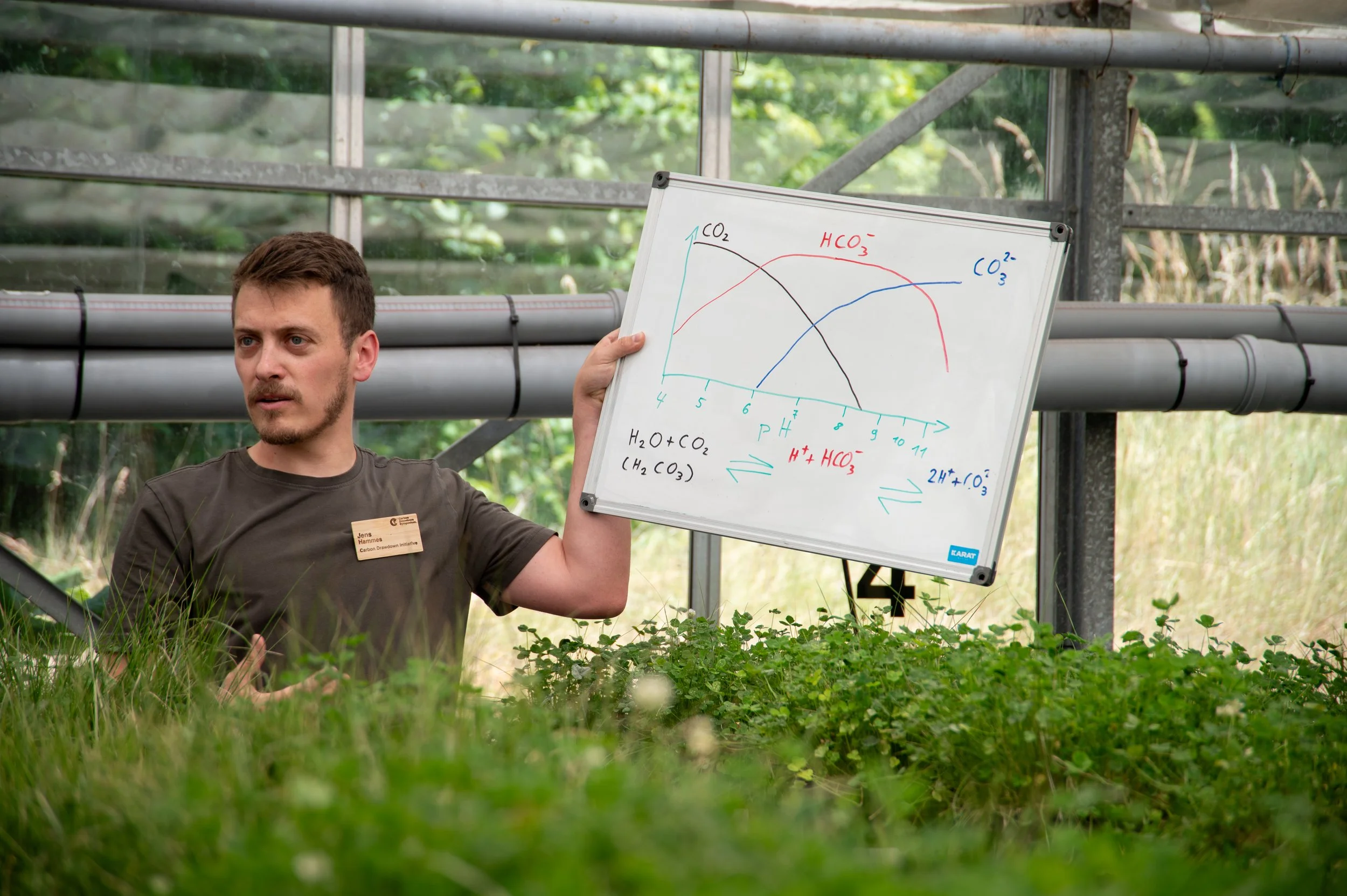
The third lever is scientific work. We wanted to understand how enhanced weathering actually works — what is really happening down there in the soil? Here's what we learned: we tried giving money to the academic world. But it was incredibly slow (like, really slow!). Funded science turned out — for me personally as well as for the climate — too slow. So instead we dug deep into ERW ourselves. We literally got our hands dirty. Because we think in startup speed.
And let me just read you the list of universities working with us here on this greenhouse experiment, because we're genuinely proud of it: University of Erlangen-Nürnberg, ETH Zürich, University of Mainz, University of Hamburg, University of Bonn, GFZ, the Alfred Wegener Institute, Wageningen University, University of Antwerp, University of Copenhagen, Newcastle University, James Cook University in Australia, the UFZ, and the Larissa ELGO Dimitra institute in Greece (in no particular order!).
Our science focus is enhanced rock weathering. We have seven ERW investments across Europe, Africa, and North and South America — among them InPlanet, Flux, Lithos, Silicate, Eion, Silica, and Tropicarbon. Plus the ecosystem around them: Everest in Berlin builds field sensors that measure total alkalinity in the leachate. AEROC in Cologne uses satellite and drone data to cut monitoring, reporting and verification (MRV) costs — which lets us tackle the problem of field heterogeneity. Syntopa is trying to speed up ERW with bacteria. And the Rock Flour Company delivers the finest possible material there is: glacial dust.
So how did we end up with a greenhouse?
In 2021 we spread our first tonne of basalt — literally by hand — across three circles on my own property in Fürth. Then we measured and monitored like crazy all year long. And we measured nothing. No difference between control and treatment. Zero. Nada. Nothing.
In 2022 we built the next generation of the experiment: twenty XXL lysimeters made from 300-litre water barrels, buried in the ground. We added even more basalt to the Fürth soil and measured again. And again we found no carbon removal signal. Nothing.
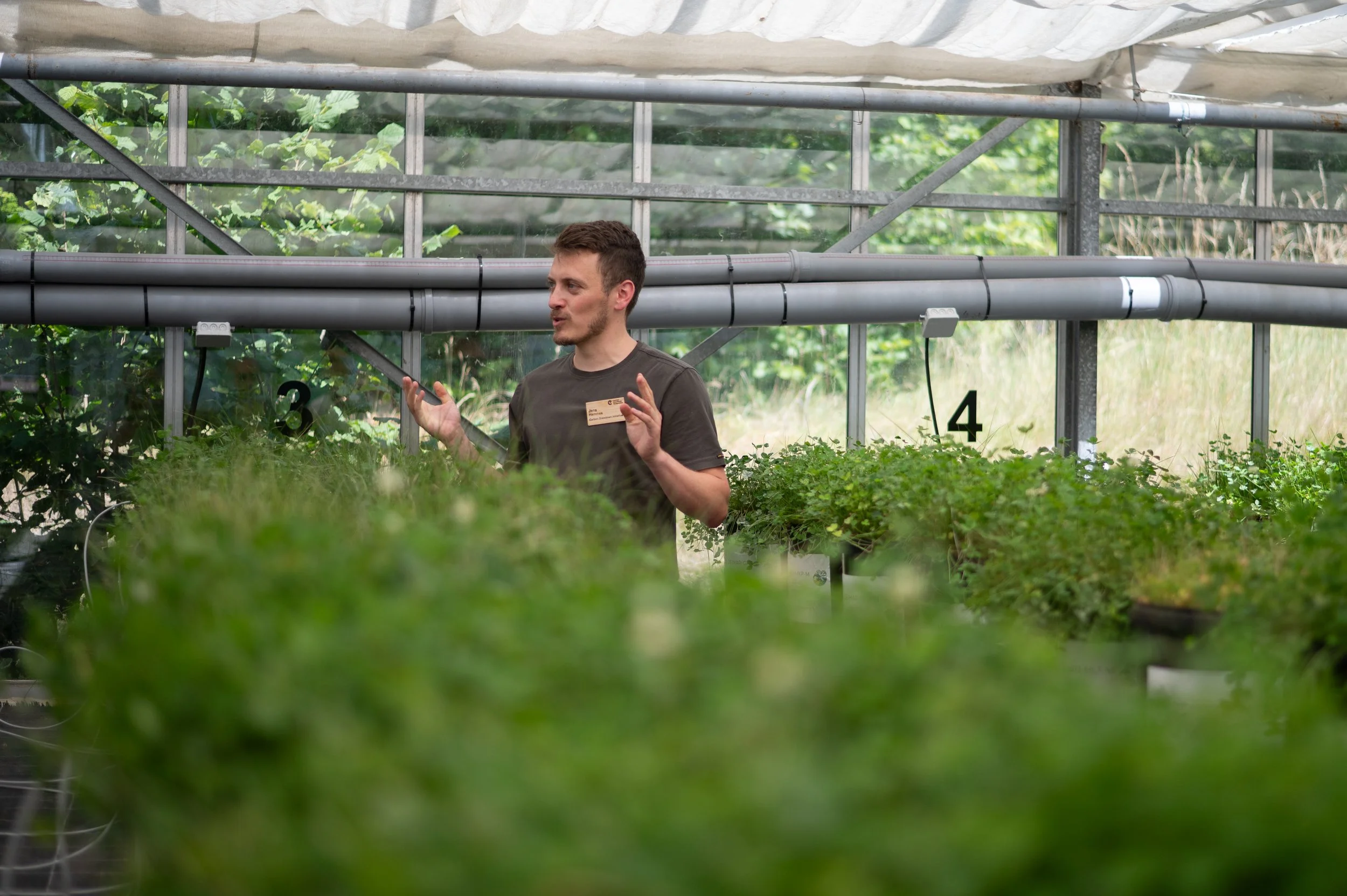
In 2023 we went even further out of nature and into a controlled environment, and we built the world's largest greenhouse experiment for ERW.
And here's what we found: the soil on my own property, called “Fürth soil”, simply doesn't do CDR — at least not when you measure it via total alkalinity in the leachate. But in the greenhouse we also found plenty of soil-and-rock combinations where ERW works really well.
In essence, two spectacular failures led us to look closer and closer. The result of four years of greenhouse work was our CDI Symposium three days ago, where we sat down with 50 scientists from the universities I just named and discussed what our greenhouse data and samples are telling us.
-----
So let me close with how we see things.
Enhanced weathering in certain settings, e.g. on tropical soils, is, for practical purposes, pretty much solved. We recently saw the first certificates being issued around the world. Companies like InPlanet, MATI, Alt Carbon, and Lithos have had their first carbon removal certificates verified.
On more complex soils like in Central Europe, for exmaple the Fürth soil, ERW is not yet fully understood. Three reasons: first, which rock fits which soil? How do we account CDR when some cations stay parked in the soil for some time. And third, modern intensive agriculture doesn't exactly make measuring easier.
We also suspect the co-benefits of ERW for crop quality and food production are more important than many people think.
ERW — like all of CDR — needs the support of policy. CDR is an opportunity for growth and prosperity for an engineering country like Germany.
And as a wealthy country, and as one of the biggest cumulative emitters, it is our duty to lead the way.
So here's my one ask. Please carry the enthusiasm for CDR and ERW that you experience here with us further — into the system — so that we get more support, and soon.
Thanks to DVNE for organizing this tour. And…. Thank you all for being here and for caring for negative emssions.
-----
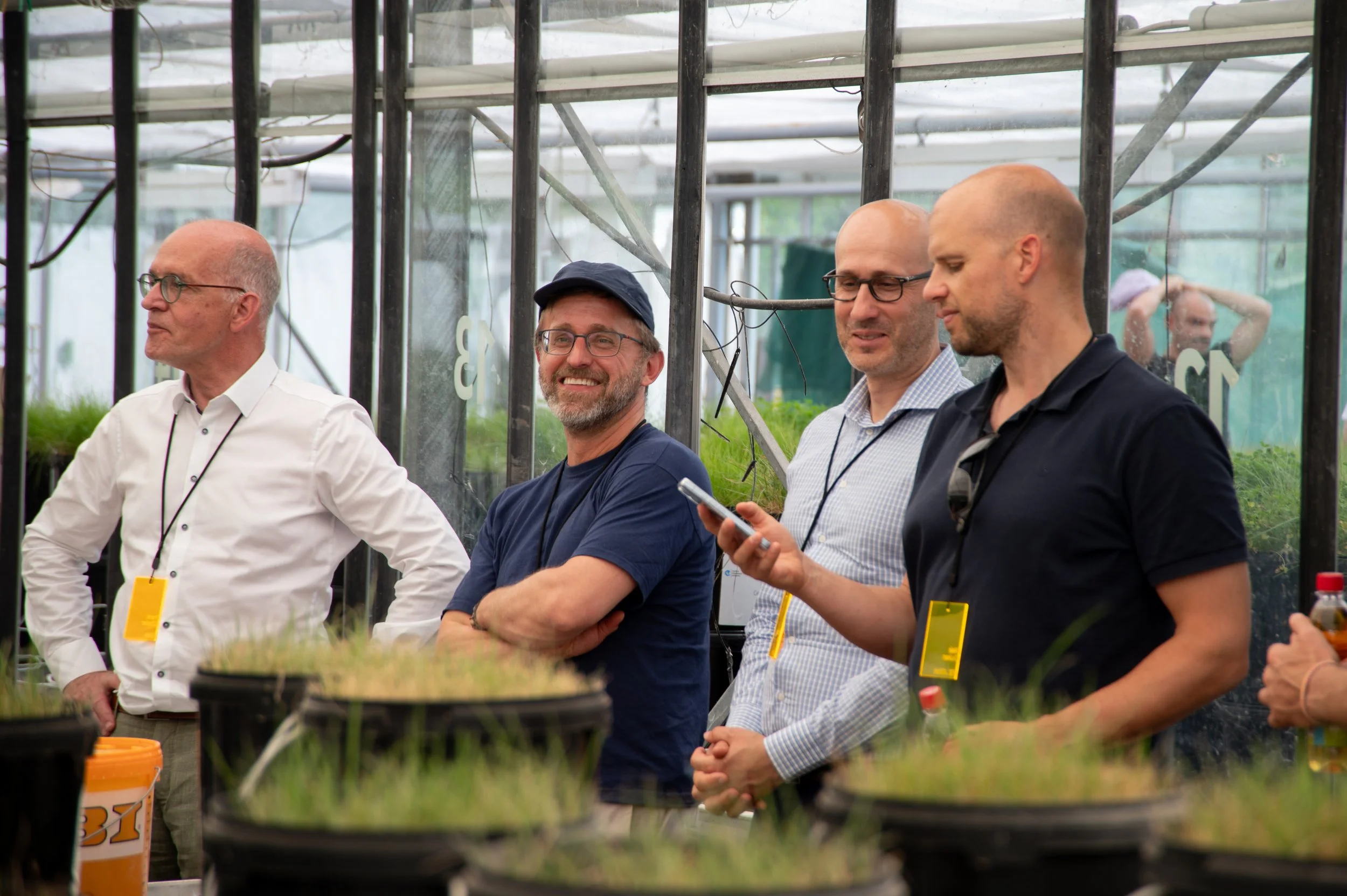
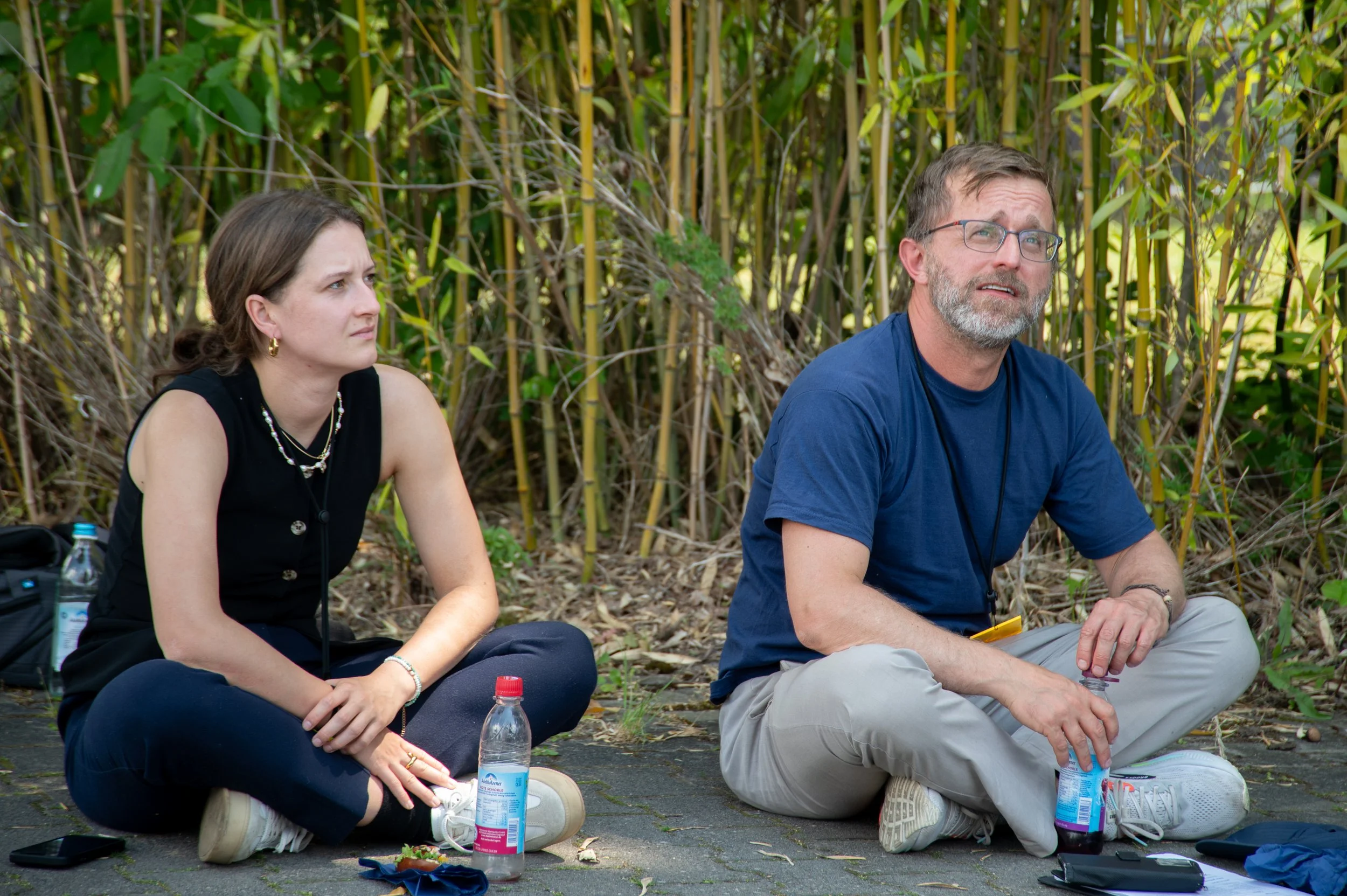
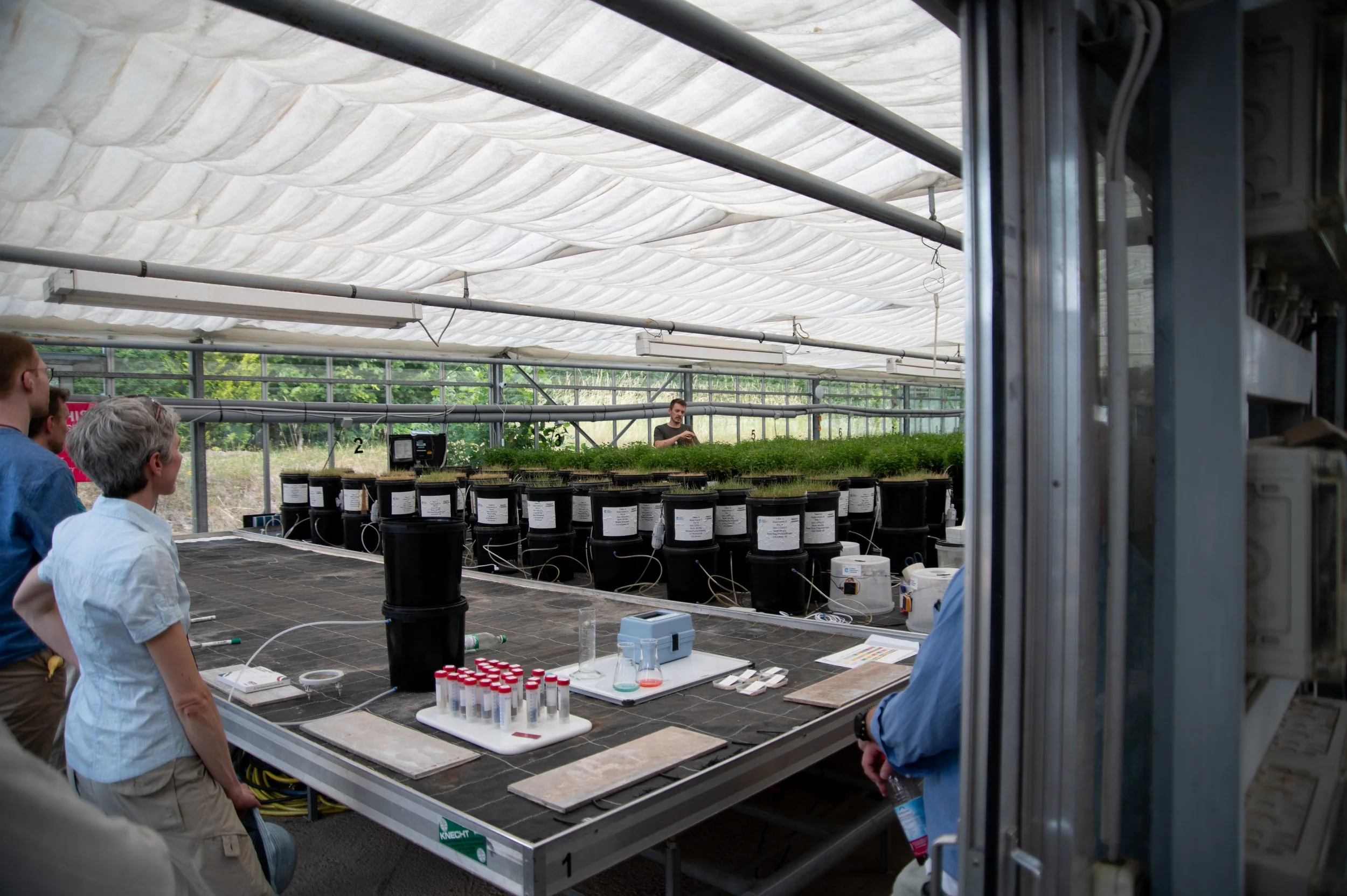
PS: Here is a time lapse video of the more scientific talks in the greenhouse the followed the welcome message
Here is a video from DVNE about the 2 day tour: