Guest post by our intern, Tina vom Hagen
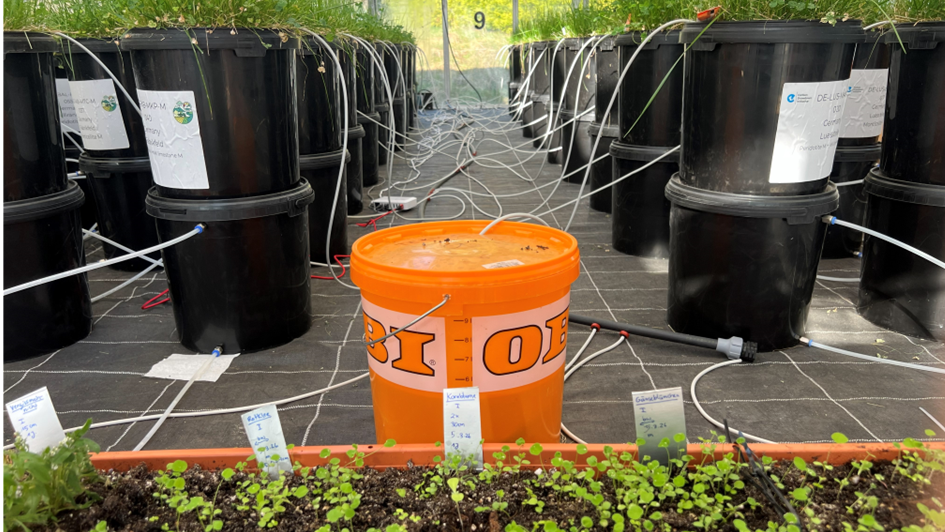
What if a few simple flower boxes could transform an entire greenhouse ecosystem? During my internship, I designed flower strips to aim exactly for this.
Our experiments often push plants to their limits: extreme pH levels, high irrigation, no fertilizer, and repeated monocultures of grasses and clover. These conditions weaken both plants and the surrounding ecosystem, making them more vulnerable to pests and diseases. While biological pest control - using lacewings, ladybird larvae, and ichneumon wasps - is already part of our strategy, we wanted to improve the conditions for the beneficial insects by entering flower strips. The flowers are supposed to provide nectar, shelter, and habitat for beneficial insects.
Designing these flower strips, however, was no small task. There is a lot to consider. The greenhouse environment can be extreme with peaks of up to 45 °C in summer. Plants must tolerate intense sunlight and heat, while soil and irrigation conditions can be adjusted. At the same time, the plants need to remain compact (30–60 cm), be easy to manage and preferably perennial. Most importantly, they should bloom throughout the year in a variety of colours to continuously attract native insects.
After extensive research, we selected nearly 30 suitable plant species and developed 10 plant boxes. From drilling drainage holes to mixing soils, installing irrigation tubes and sowing, the setup required precision and patience - even resulting in a blister or two! But the effort paid off quickly: within just five days, most seeds had already germinated, bringing the first signs of life to the project.
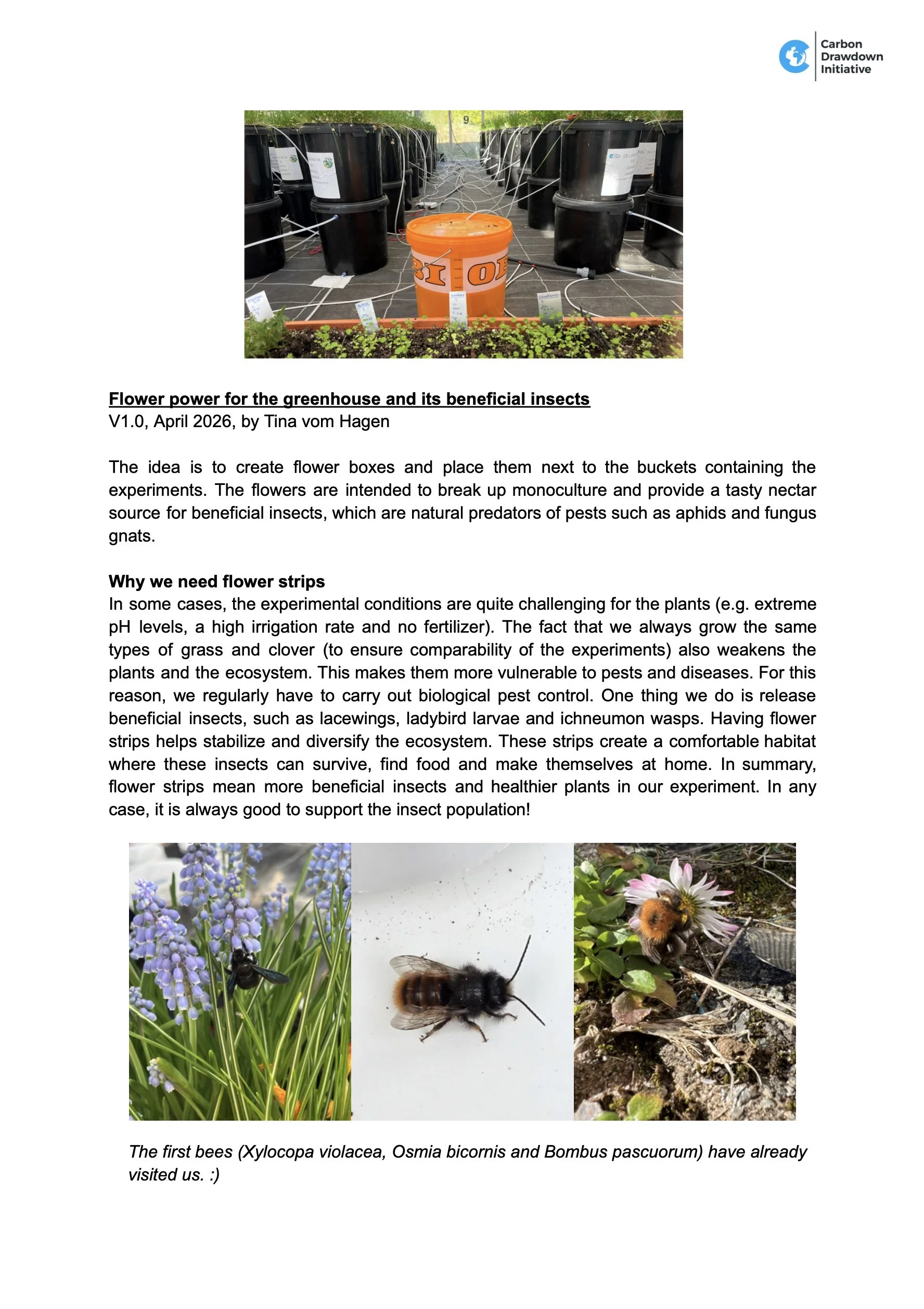
Are you curious what it looks like?
You can find the full report with pictures showing all the steps to make our greenhouse more flowery here :)
Full Report (12 MB, pdf)