Portfolio Spotlight: Everest — Measuring EW in Real Time

This series highlights the companies Carbon Drawdown Initiative has invested in.
If enhanced weathering is the engine of carbon removal, Everest is the speedometer telling us how fast we are moving.
For years, tracking the carbon drawdown from rock dust required tedious, manual sampling. Researchers hauled liters of leachate (or, to be more honest, often one is lucky to draw just a few milliliters from the soil in summer) or soils back to the lab for extensive tests. It works, but only just: these approaches are expensive, slow, and full of data gaps. Every missing data point means lost insight into how CO₂ actually left the soil - what is missing is the temporal changes of the signals.
Our recent paper, Evaluating Carbon Dynamics for Enhanced Weathering, confirmed it: alkalinity-based measurements remain the gold standard for proving real carbon capture. In order to scale enhanced weathering, we need a way to take those measurements continuously, cheaply, and everywhere.
That is where Everest comes in.
Turning Carbon Science into Continuous Signals
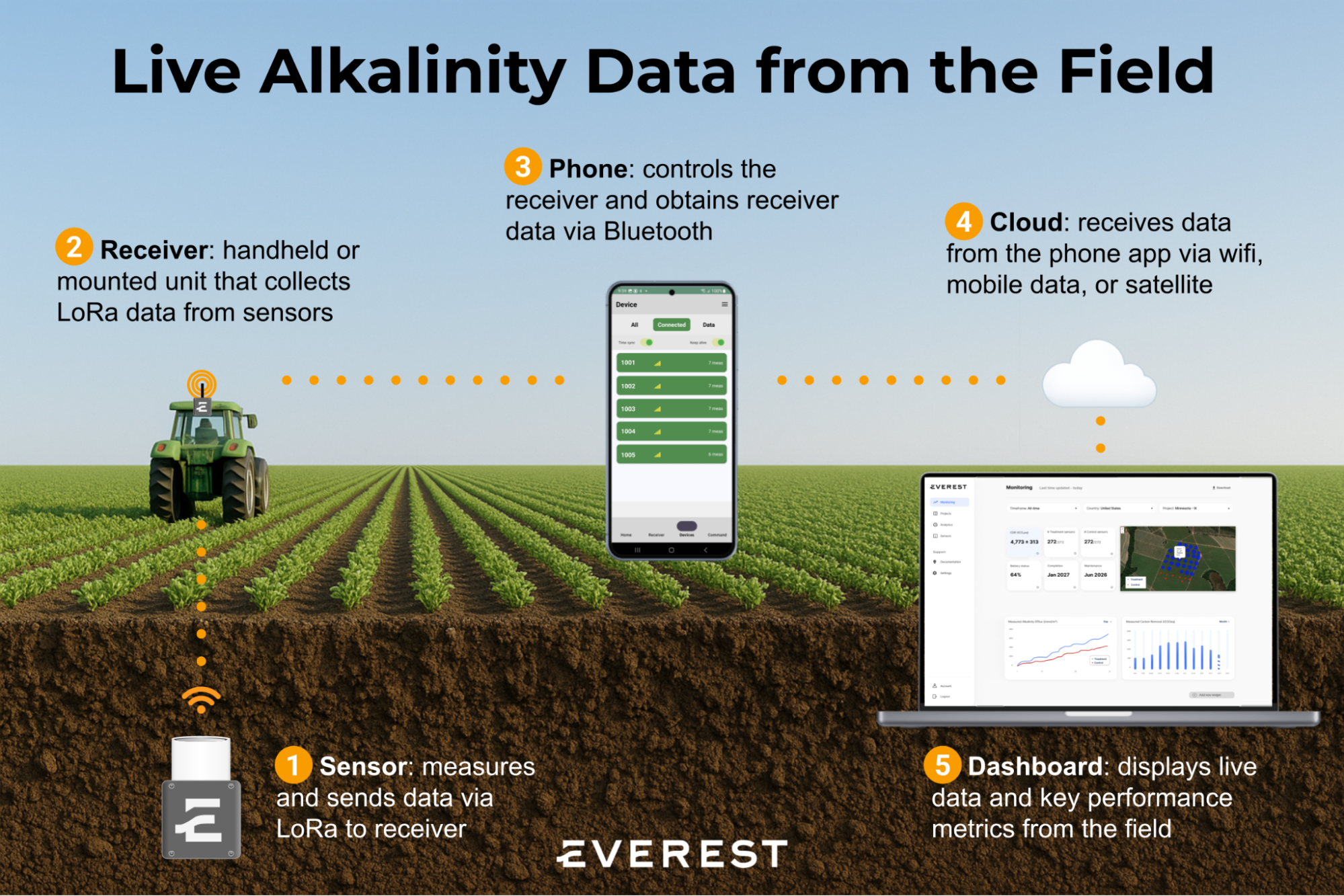
Everest builds in-field electronic sensors that measure alkalinity 24/7, with no sampling, shipping, or waiting. Buried directly into the soil in both control and treated plots, these sensors record the alkalinity flowing through the soil. Subtracting one from the other provides a clean, time-integrated record of how much CO₂ has been captured and exported as total alkalinity.
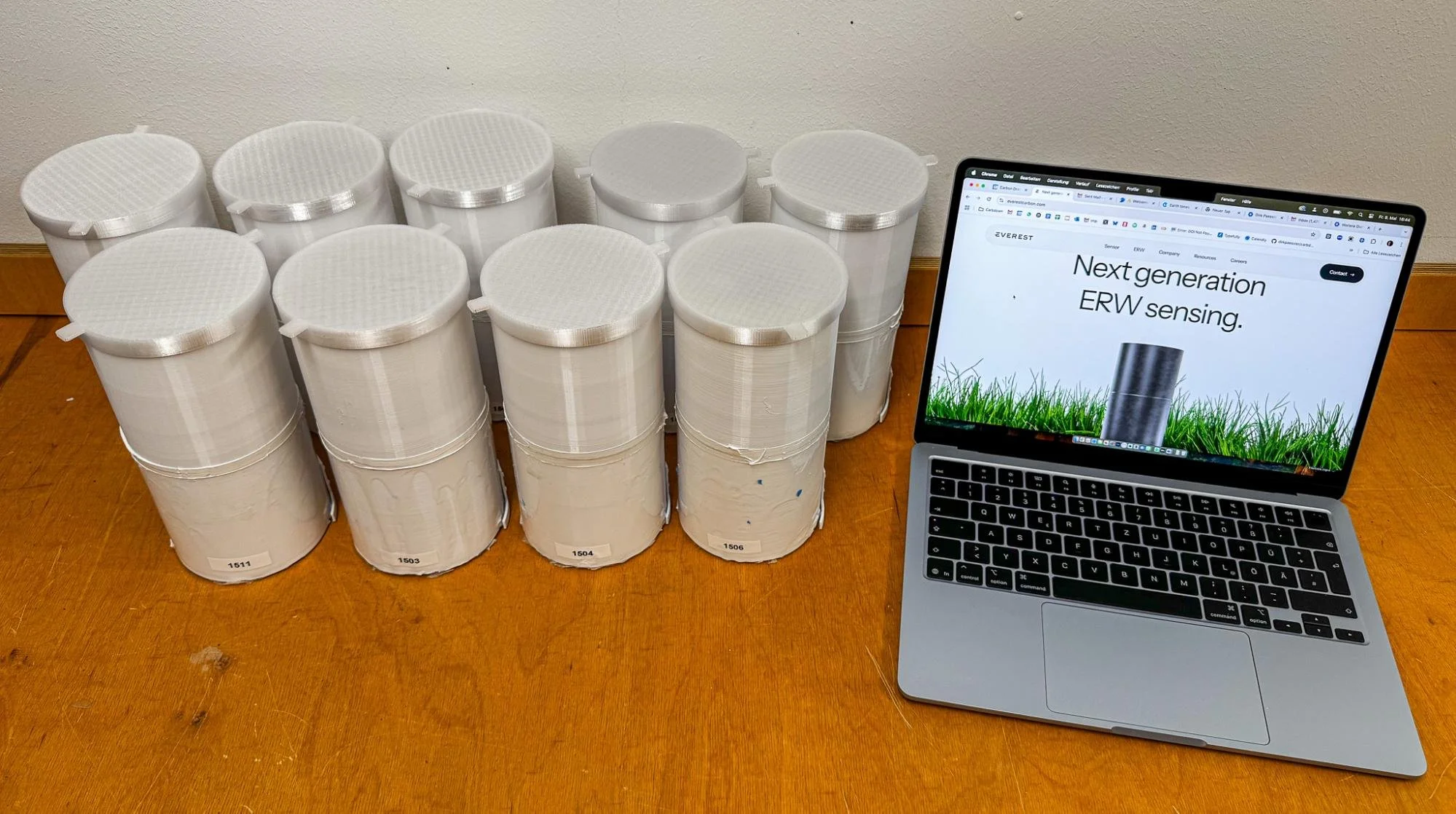
CDI received 15 of the first 300 Everest sensors ever produced. We installed nine of them in our XXL lysimeters, and within weeks the data spoke clearly:
Treated plots showed significantly higher cumulative alkalinity export (p < 0.05).
Rainfall events from mid-May to mid-June correlated with around 0.2 t CO₂/ha additional export.
Later in summer, exports declined, even with similar rainfall. This is likely due to increased evaporation.
These insights, at full temporal resolution, were never possible before. Real-time alkalinity monitoring speeds up how fast we can evaluate and improve our understanding of enhanced weathering.
This is what these early sensor prototypes we received in April looked like:
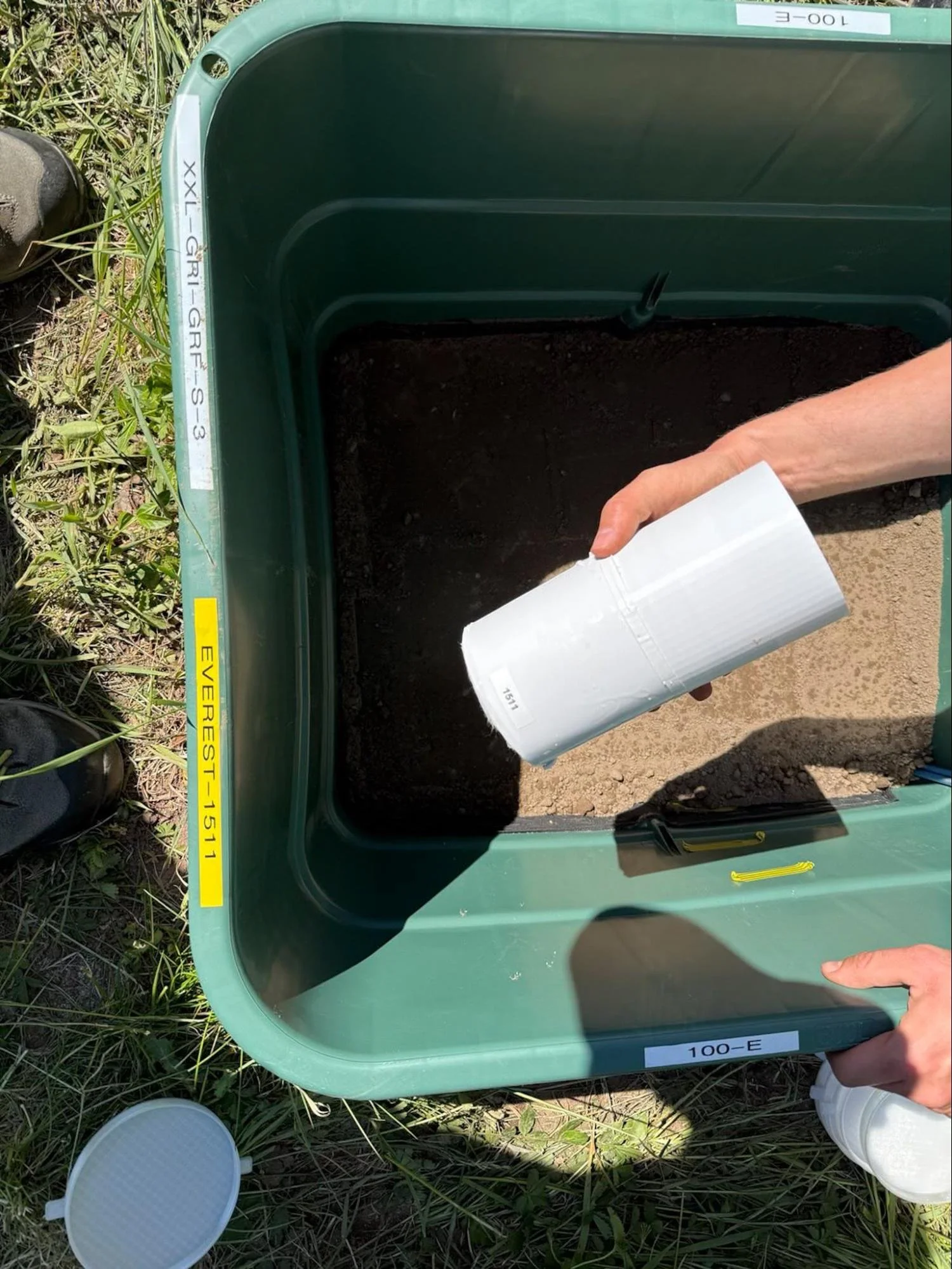
Here we put one of them into an XXL lysimeter in April 2025:
A New Generation of MRV Tools
In the meantime Everest has continued to refine their tech, recently announcing the third generation of their alkalinity sensor ‘Pulsar’, with major upgrades including:
3-year lifetime and significantly lower $167/y levelized cost,
Swappable resin cartridges with up to 5 t CO₂/ha capacity, extendable for multi-year monitoring,
Demonstrated near-quantitative capture and recovery of alkalinity (98%), and 0.3% deviation between electronic and titrated alkalinity in controlled lab conditions
Hundreds of units are already in the ground at enhanced weathering projects worldwide, building the foundation for scalable and trustworthy MRV.
Why It Matters
Continuous and distributed alkalinity data help us:
Build trust in enhanced weathering through direct proof of alkalinity export from the near field zone.
Validate simpler, low-cost proxies for future MRV applications.
Lower monitoring costs as production scales.
For the first time, we can watch carbon removal happen in real time, connecting rainfall, soil type, and rock chemistry to measurable CO₂ export. These learnings will make the entire industry faster, cheaper, and more credible.
Everest sensors could eventually become the backbone of the MRV system if cost, longevity, and spatial coverage align. The devices are already included as validation measurements in various leading carbon registries and are helping CDI and our peers close the gap between science and scale.
Why We Back Everest
For enhanced weathering to scale from pilot plots to gigaton impact, measurement must scale first.
This is how Everest is driving this forward:
Trust: Measuring alkalinity export is the most direct proof that carbon has been sequestered and has actually left the system. Reliable in-field measurement makes MRV transparent and credible.
Accuracy: High-accuracy alkalinity sensor data helps close the gap between aqueous and solid-phase weathering signals, enabling more reliable and consistent MRV.
Speed: Automated, continuous data reduces years of waiting to weeks for detecting real differences between rock types, soils, and treatments.
Scale: Everest’s approach cuts cost and labor from the most time-consuming part of enhanced weathering science and opens the path for thousands of sensors worldwide.
Learning: With high-frequency data, we can validate total alkalinity measurements under diverse soil, hydrological, and climate conditions and eventually lower MRV costs across the whole industry. And soon some Everest data will show up in the Cascade ERW Data Quarry.
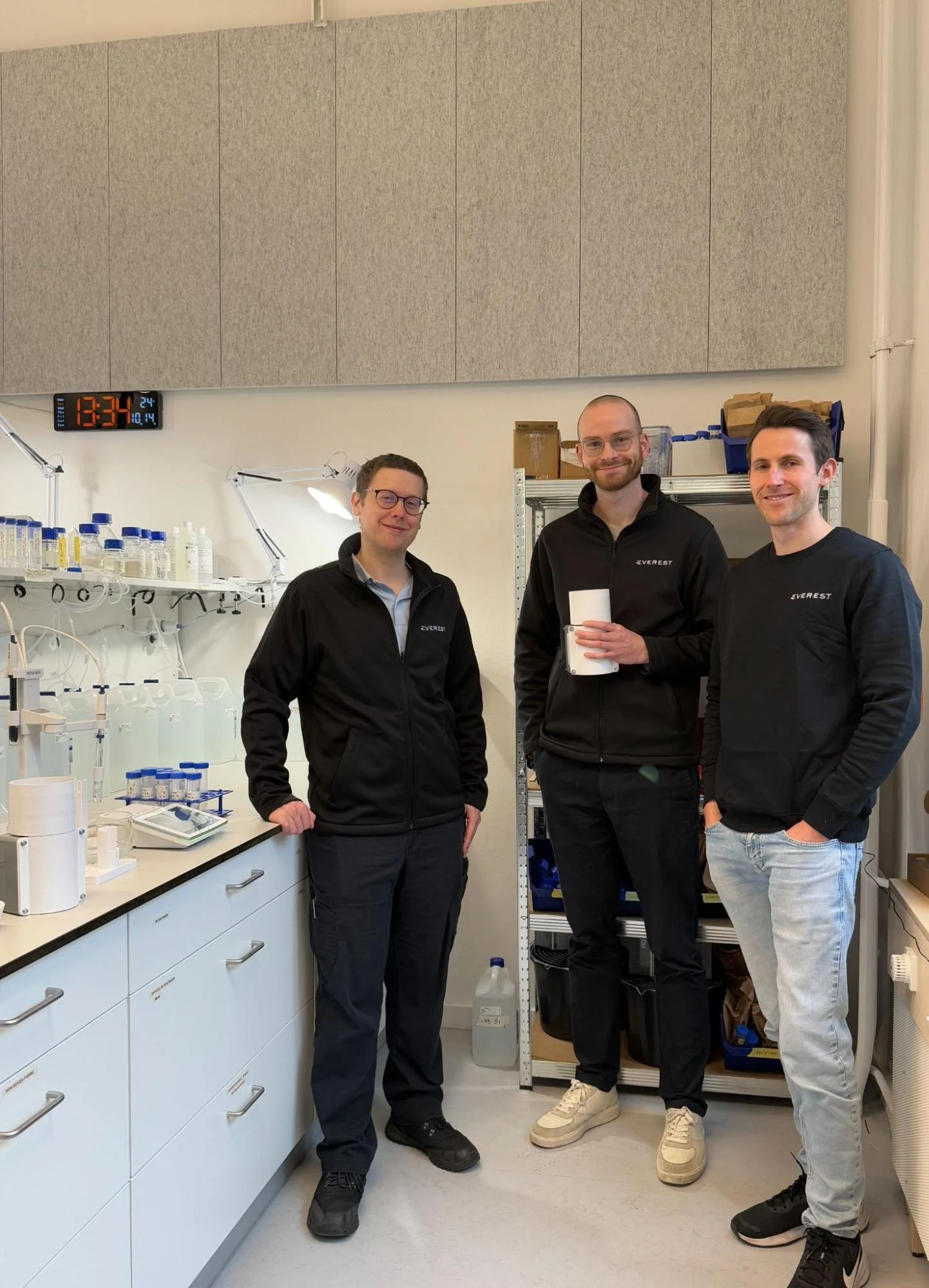
This is why Carbon Drawdown Initiative invested in Everest early. We see them not only as a toolmaker but as an enabler of the entire enhanced weathering ecosystem. Without accurate and affordable sensors, the industry cannot grow fast enough to make a difference.
Our role is to help that capability reach scale so that every tonne of carbon removed can be measured, verified, and trusted.
Everest moves us all closer to understanding and scaling enhanced weathering.
To learn more about Everest, visit: https://www.everestcarbon.com/
For scientific insights read their paper “Direct In Situ Measurement of Alkalinity Export for Real-Time Enhanced Weathering MRV” (Pre-Print)