Portfolio Spotlight: sequestra — Turning Industrial Waste into Permanent Carbon Storage
This series highlights the companies Carbon Drawdown Initiative has invested in.
Heavy industry produces emissions. It also produces residues – slags, ashes, mineral by-products that often sit unused. What if those materials could permanently bind CO₂ instead?
That’s exactly what sequestra, a Vienna-based climate-tech startup founded in 2024, is building toward.
Instead of extracting new materials or relying solely on biological pathways, sequestra focuses on mineral carbonation — a natural chemical process that locks carbon dioxide into stable minerals. Their approach transforms industrial waste streams into durable carbon sinks while creating usable materials for applications like construction.
At its core, this is mineral chemistry applied at industrial scale.
Engineering Carbon Permanence
The team combines:
Material science — understanding how different residues react with CO₂
Process engineering — designing scalable industrial systems
Data-driven optimization — accelerating carbonation efficiently
By targeting slags and ashes already generated in heavy industry, sequestra addresses two problems at once:
Industrial waste accumulation
Atmospheric CO₂ concentration
The results: Permanent carbon storage embedded directly into industrial value chains. And because their customers operate within the EU ETS and voluntary carbon markets, sequestra is building solutions aligned with real regulatory and economic drivers.
Built by Engineers Who Know Heavy Industry
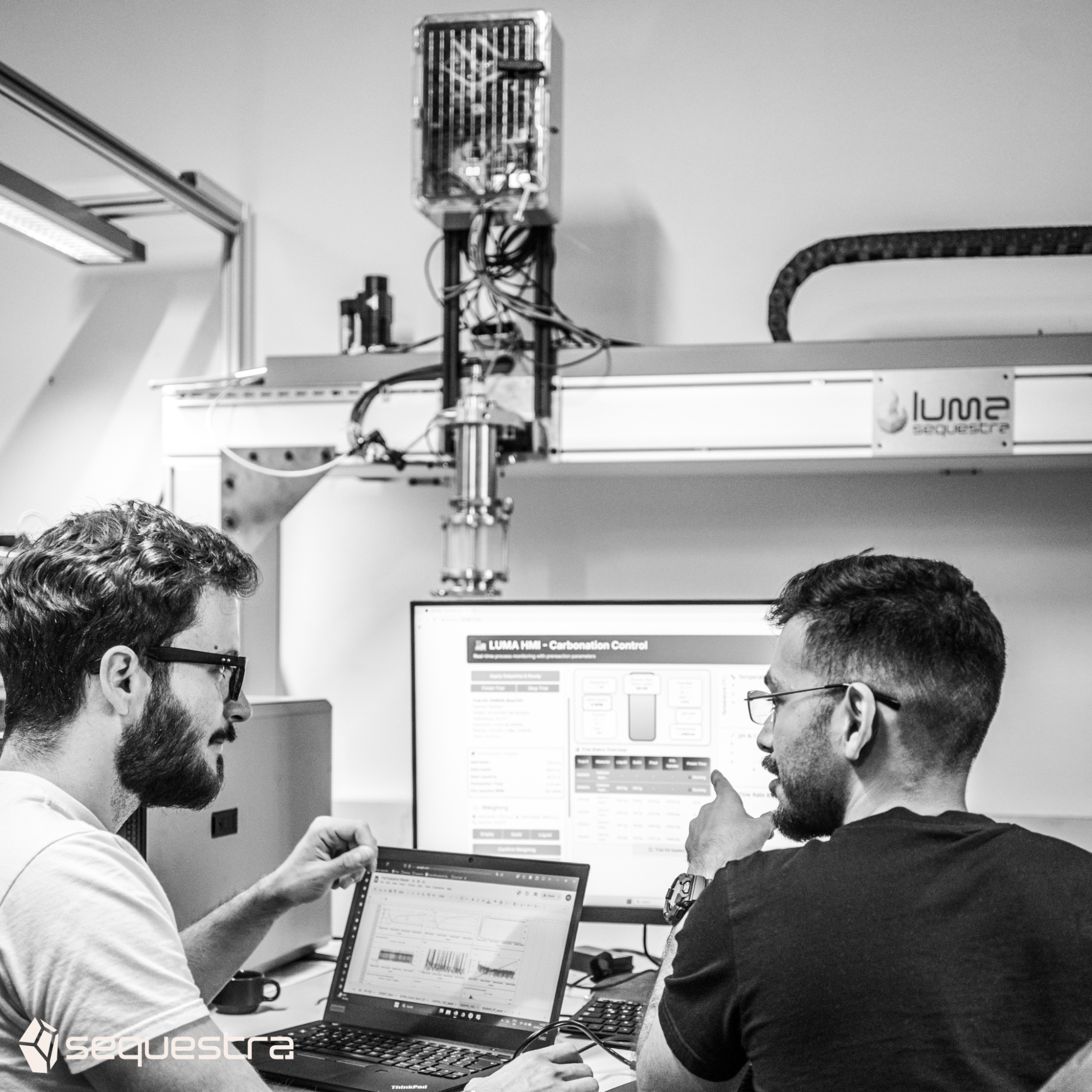
The founding team – Lukas Höber, Roberto Lerche, and Gero Schwarz – are engineers specialized in heavy industry. Scientific development is led by Matthias Ginterseder, former CTO of a startup active in enhanced rock weathering. That combination of industrial pragmatism and deep climate science matters. Carbon removal only scales when it integrates into existing systems. As of January 2026, sequestra is a 15-person team — small, focused, and moving quickly.
Milestones and Momentum
Since its founding in 2024, sequestra has moved quickly from concept to real-world validation.
In just two years, the team has:
Closed two funding rounds
Secured substantial public funding from Austrian programs such as FFG
Progressed from lab-scale research to prototype and pilot projects with industrial partners
Participated in leading accelerator and innovation programs
Received national and international recognition for climate impact
What comes next:
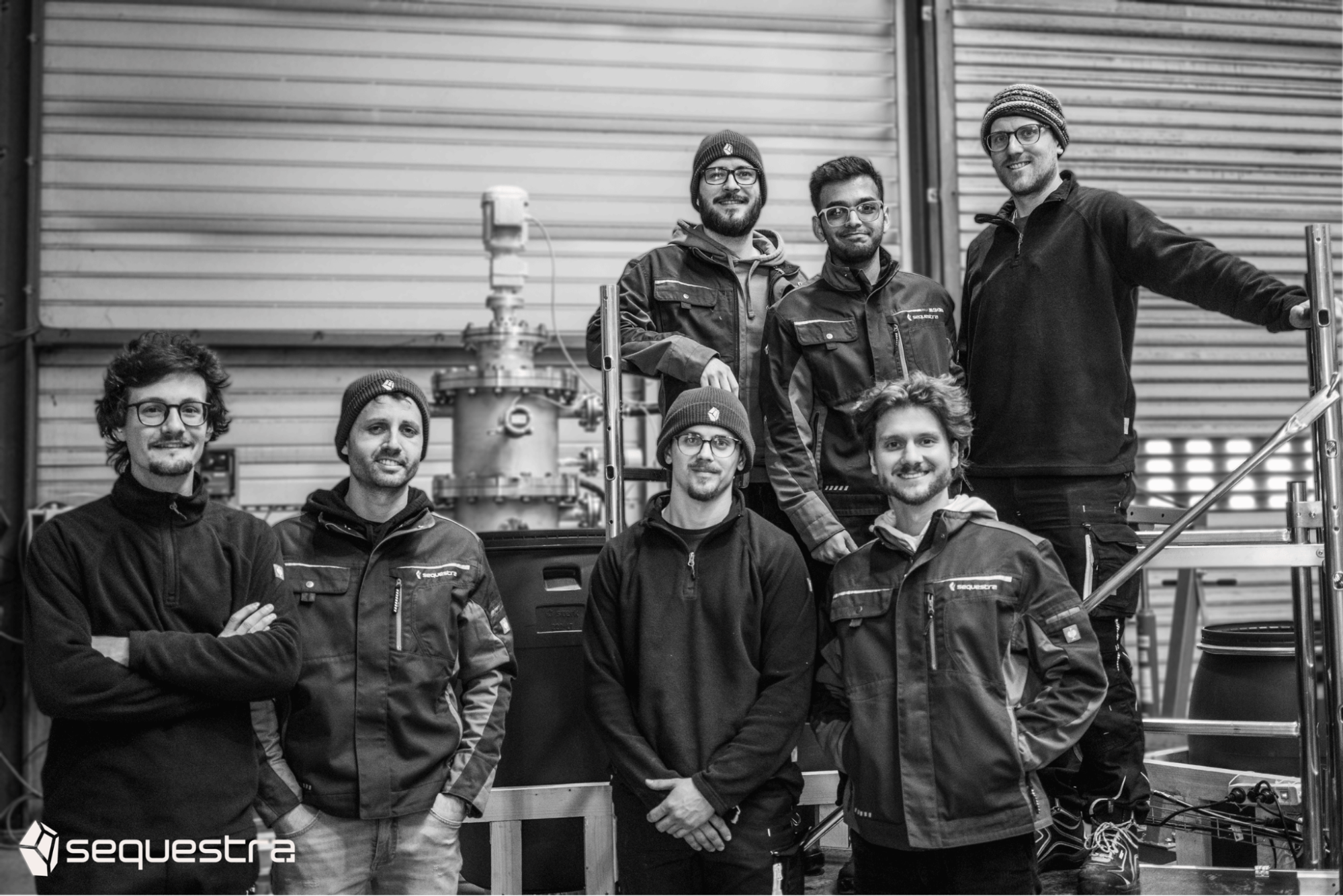
Mid-2026: Launch of the world’s first dedicated rapid-testing lab for carbonation potential across diverse materials
End of 2027: Scale to 1 ton per hour of continuous mineral processing
This is how climate technology moves from controlled experiments to industrial deployment.
Why This Matters
Mineral carbonation is not a speculative idea. It is a well-understood geochemical process that happens naturally over geological timescales. The challenge is not proving that it works — it is accelerating and integrating it into industrial systems.
sequestra applies this chemistry where materials are already concentrated and handled at scale. Instead of treating removals as a separate climate activity, the company embeds permanence into industrial by-products. That systems-level integration is essential if carbon removal is to reach meaningful scale.
Why We Back sequestra
At Carbon Drawdown Initiative, we back teams that combine scientific rigor with industrial realism. sequestra impressed us not only because mineral carbonation is robust chemistry – but because the founders understand how heavy industry actually operates.
They are engineers who speak the language of operators, regulators, and plant managers. That matters when moving from pilot projects to deployment. We also value their stepwise approach: validate the science, build testing infrastructure, scale throughput methodically.
Scaling carbon removal is not only a chemistry challenge – it is an execution challenge. This team understands both.
That is why we are backing them.