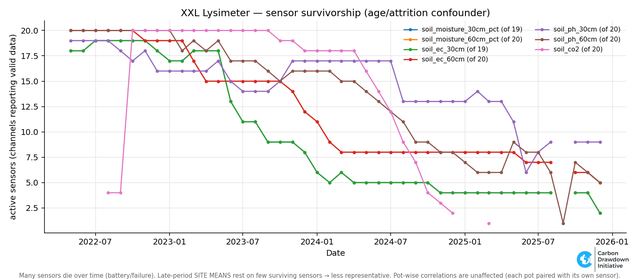
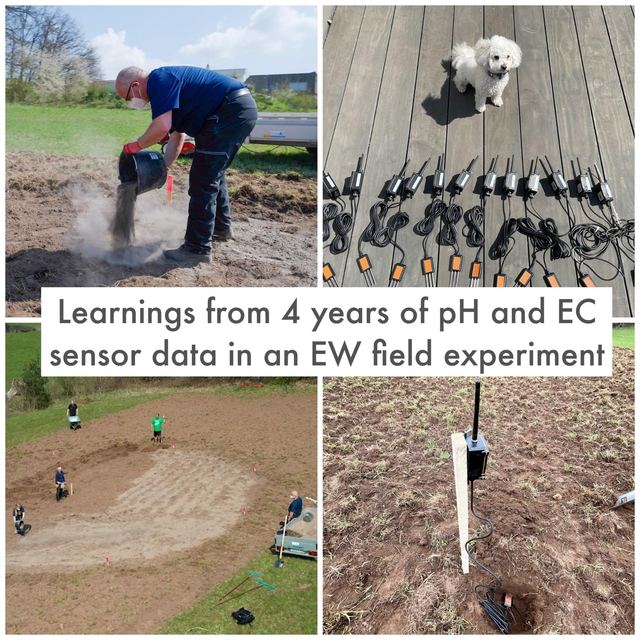
The first five articles were about signal. This one is about the plumbing — the rain gauges, ambient monitors and buried probes that made the rest possible…
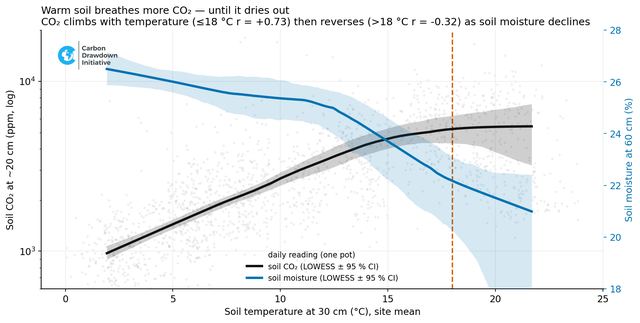
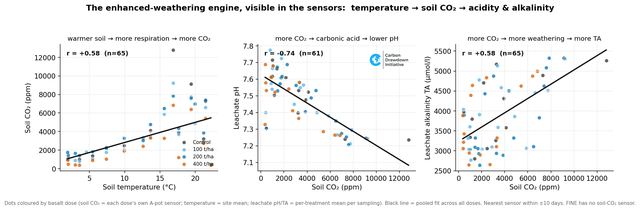
A soil-CO₂ sensor is a tempting instrument. Weathering consumes CO₂, so — the reasoning goes — bury a probe, log the gas, and read carbon removal straight out…
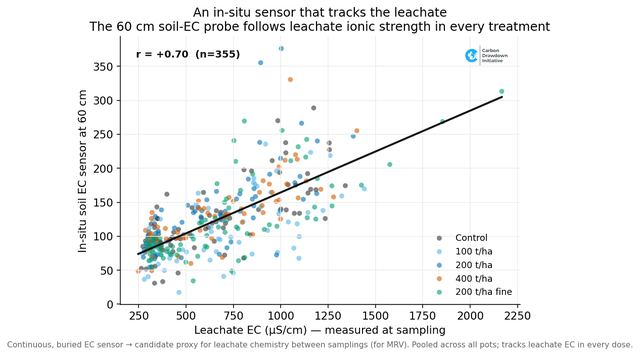
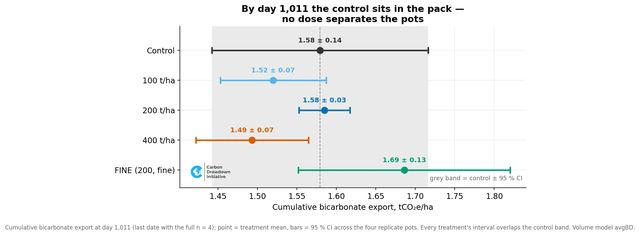
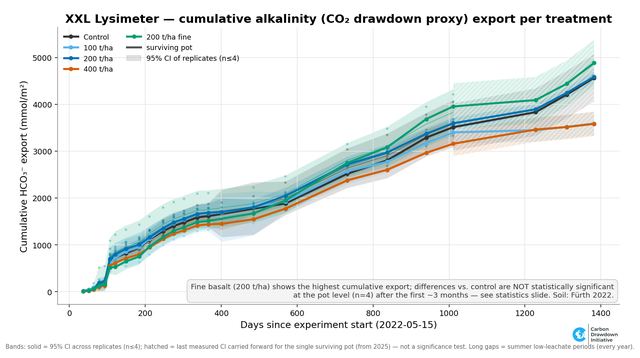
In article 2 the leachate refused to separate the doses. Now we turn to the buried sensors, and the tone changes: they reveal a clean, repeatable engine that…
The intuition behind enhanced rock weathering is a straight line: more rock means more mineral surface, more surface means more dissolution, more dissolution means…
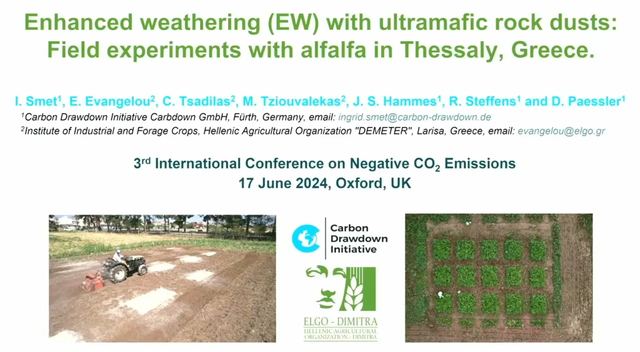
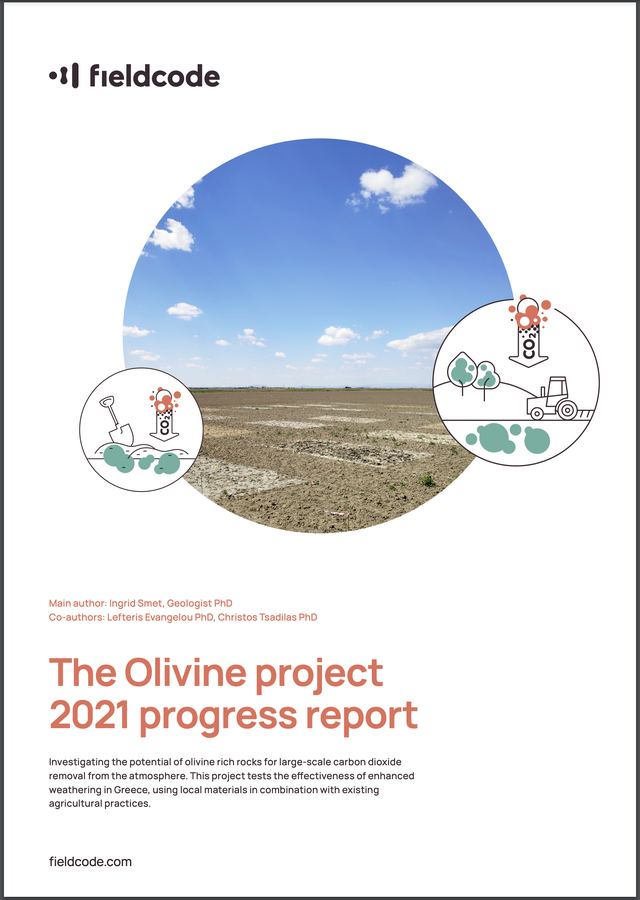
A guest-blog-post by Dr. Ingrid Smet introducing her detailed report on all the do’s & don’ts, lightbulb & head scratch moments, behind-the-scenes information & preliminary conclusions from the first year of spreading 6 different olivine rich rock dusts (a total of 4500 kg) to a 2 hectare cotton field in Thessaly/Greece.
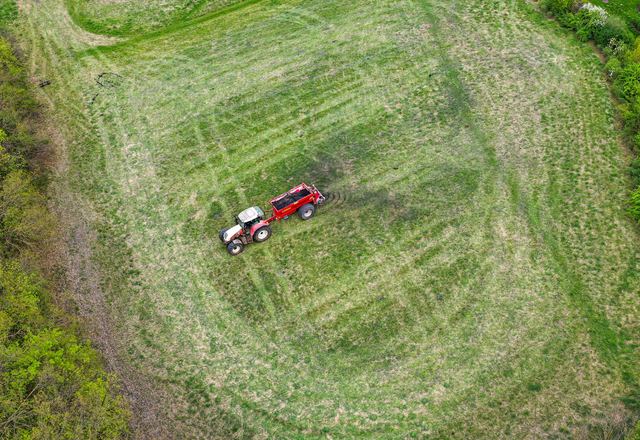
How could spreading 40 t/ha work from a practical perspective? At Project Carbdown we have undertaken a few practical experiments over the last 2 years which we want to document in this blog post.
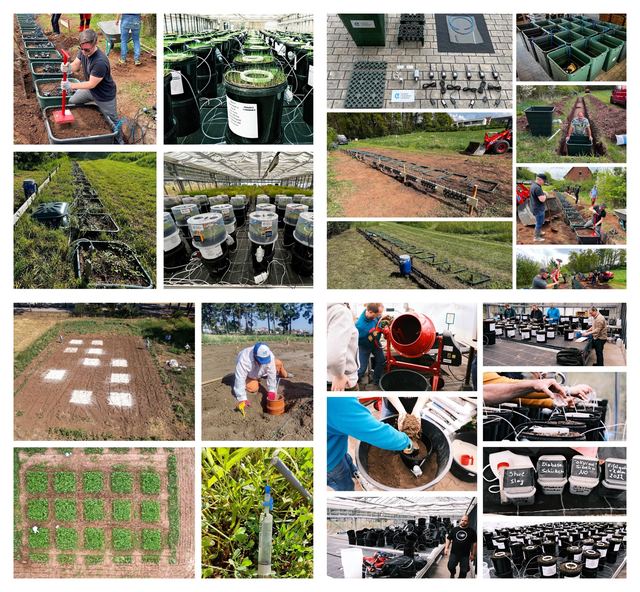
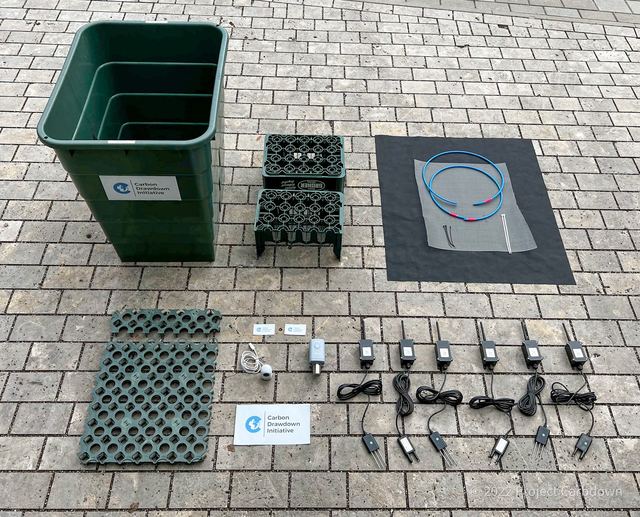
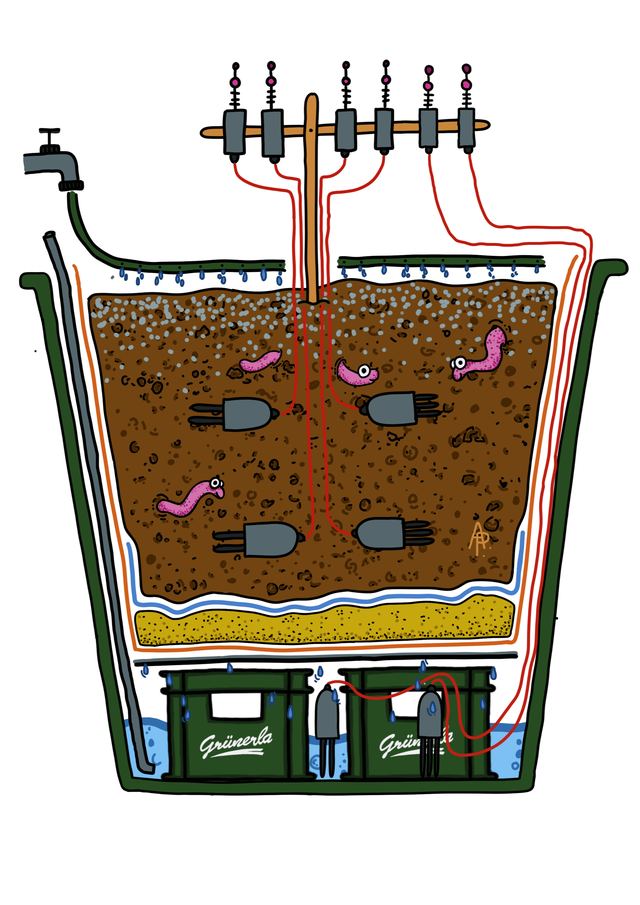
Based on the results from last year’s enhanced rock weathering experiments on our field in Fürth we decided to build a new, improved experiment in 2022: The XXL Lysimeter Project. For this experiment we had to engineer and build 20 large lysimeters and put them into the field. This is a photo logbook of this process.
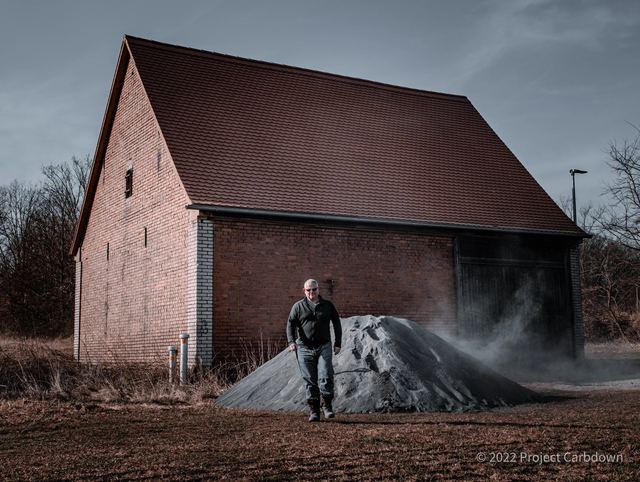
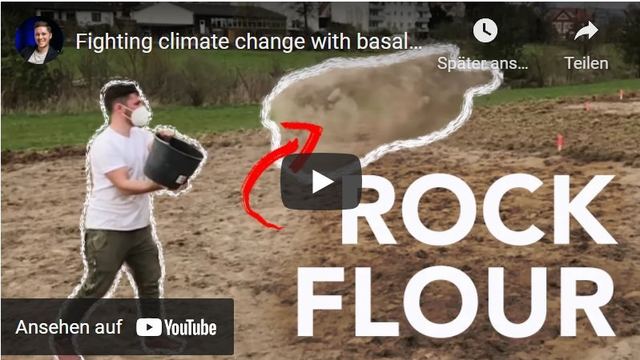
What you see here is a pile of 29 tons of basalt dust, one truckload. Over the next few years this basalt will suck 9 tons of CO2 from the ambient air when the dust is simply spread on half a hectare or one hectare of cropland. With this pile one average citizen of Germany is becoming climate neutral.
We recently published a long blog post with our learnings of the first year. These learnings lead to an additional, updated experiment that we will set up in early 2022, the Carbdown XXL Lysimeter Project!
Project Carbdown, our science project aimed at measuring the CO₂ sequestration by enhanced rock weathering with rock dust on croplands, has been going on for a year now. It is time to look at the results of the first year, draw some conclusions and adapt the ongoing experiments accordingly. After a short introduction this article summarizes our learnings and conclusions. These will lead to some changes to our ongoing experiments and have also triggered the development of a new, additional experiment, the “Carbdown XXL-Lysimeter Experiment” that we will announce in a few days.
Six months ago we started working for Project Carbdown on our fields in Larissa (Greece) as well as in Fürth and in Bramstedt (Germany). This blog is our photo album of what happened since then.
The weathering of rock permanently binds CO₂ from the air and thus removes it from the atmosphere. Can this be used to mitigate climate change? For a few months now, we have been preparing a scientific project together with several scientists and our partner Fieldcode in which we want to accelerate and measure the weathering of rocks, in order to possibly expand the toolbox for climate protection. Today we are proud to announce: Project Carbdown.
Durch die Verwitterung von Gestein wird CO₂ aus der Luft permanent gebunden und so der Atmosphäre entzogen. Können wir damit etwas gegen den Klimawandel tun? Seit einigen Monaten bereiten wir zusammen mit einigen Wissenschaftlern und unserem Partner Fieldcode ein wissenschaftliches Projekt vor, bei dem wir Gesteinsverwitterung beschleunigen und vermessen wollen, um möglicherweise damit den Werkzeugkasten des Klimaschutzes zu erweitern. Heute stellen wir also vor: Project Carbdown.
In our endeavor to enable negative emissions one of our next goals is to set up olivine based pilot projects for enhanced rock weathering together with our partner company Fieldcode. This blog article explains WHY we do this and WHAT questions we need to find answers for.