Biomass Assessment of Weathering in the XXL Lysimeters
· Field and lysimeter experiments, Measurement and MRVFor the XXL lysimeter experiment we planted 80 cosmea plants into our 20 lysimeters in spring.
For the XXL lysimeter experiment we planted 80 cosmea plants into our 20 lysimeters in spring.
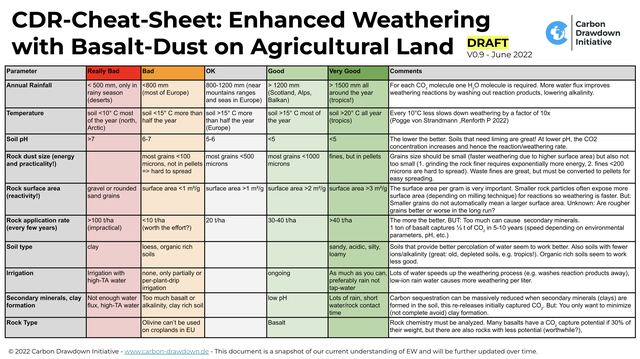
Our new cheat sheet makes it possible to design early ERW pilot-projects today even without having those glitzy models of the future and before all those field tests have been done. Let’s start scaling now!
While digging deeper into ERW every few months we encounter yet another rabbit hole moment when we come across another important parameter that influences the weathering activity and that needs attention.
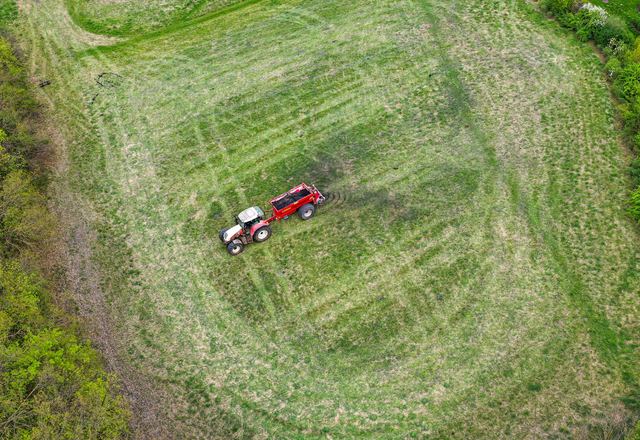
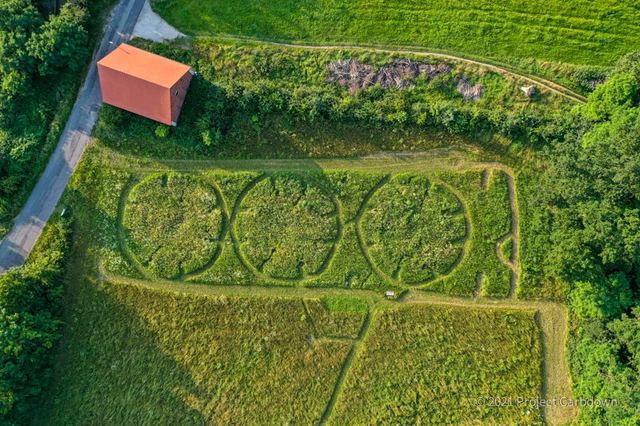
How could spreading 40 t/ha work from a practical perspective? At Project Carbdown we have undertaken a few practical experiments over the last 2 years which we want to document in this blog post.
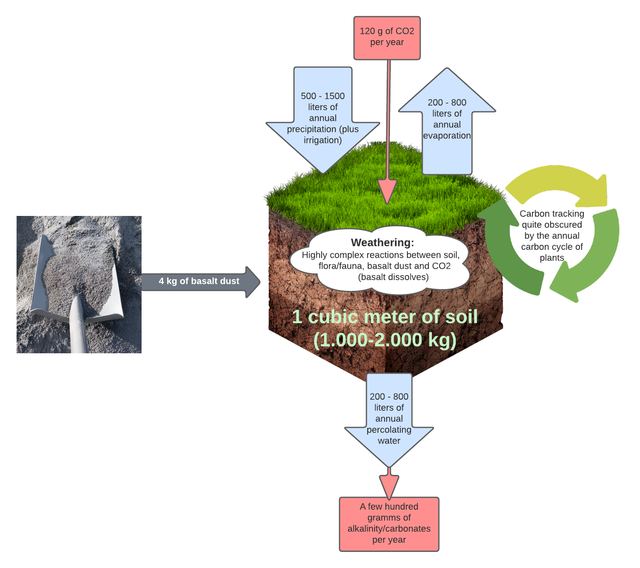
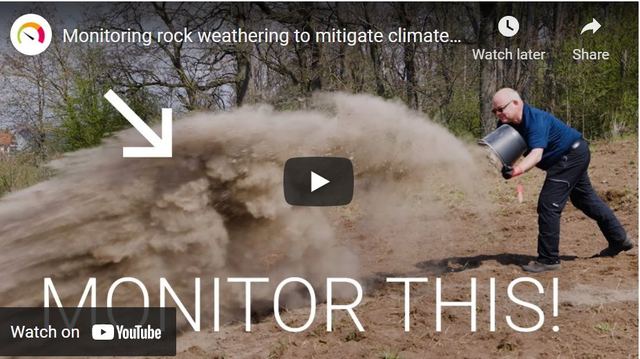
Measuring the weathering rates of basalt in “open nature” is very hard to do. To properly assess the weathering rates we need to measure this “in the field” as lab experiments are expected to show lower weathering rates which causes us to underestimate the carbon removal rates. Here is a short overview.
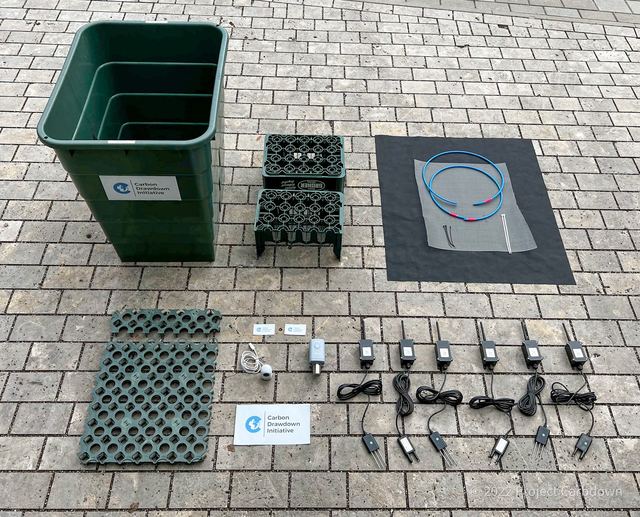
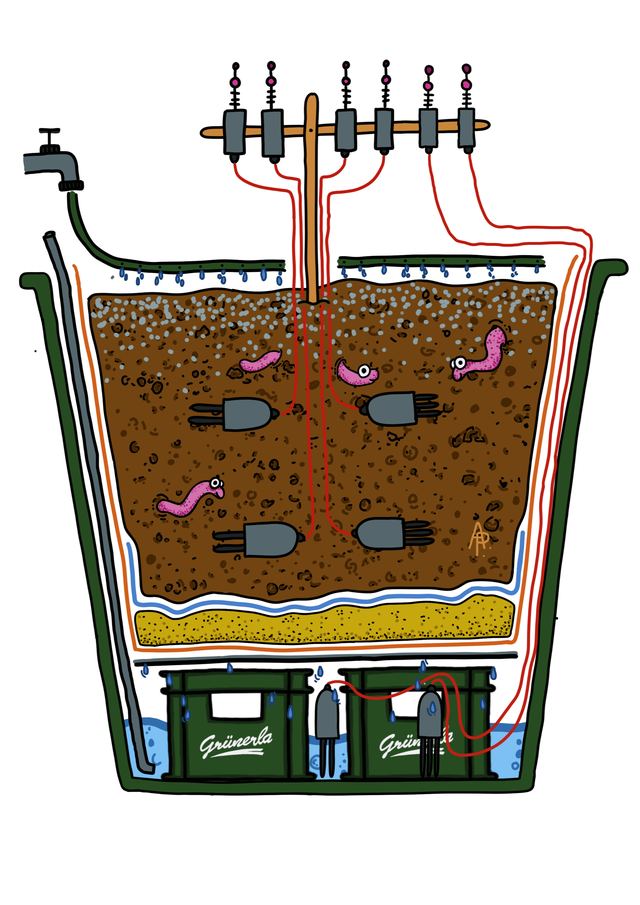
Based on the results from last year’s enhanced rock weathering experiments on our field in Fürth we decided to build a new, improved experiment in 2022: The XXL Lysimeter Project. For this experiment we had to engineer and build 20 large lysimeters and put them into the field. This is a photo logbook of this process.
In this document I’d like to explore from my -- of course limited -- perspective what this could mean for climate startups, especially with regard to the urgent scale up of climate solutions for CDR (carbon dioxide reduction) which simply can’t be delayed.
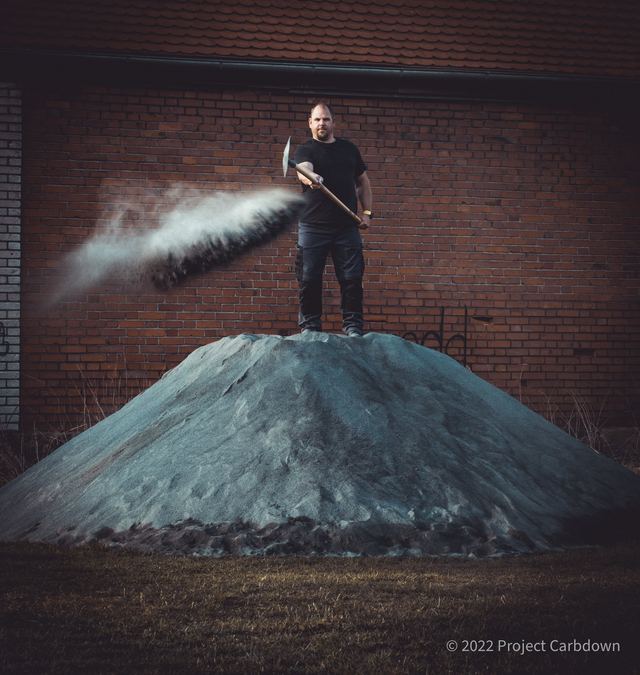
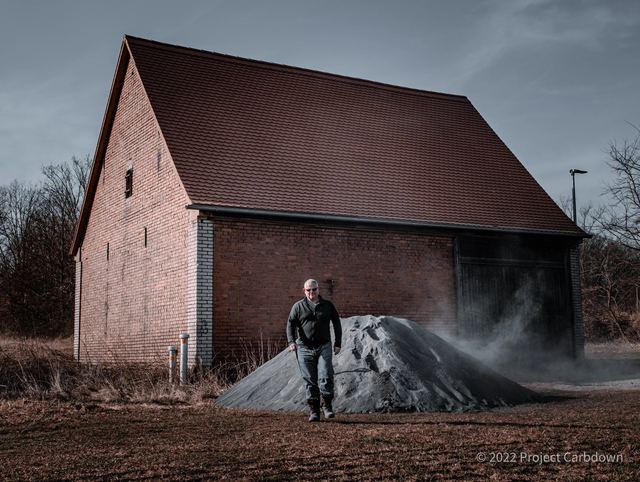
What you see here is a pile of 29 tons of basalt dust, one truckload. Over the next few years this basalt will suck 9 tons of CO2 from the ambient air when the dust is simply spread on half a hectare or one hectare of cropland. With this pile one average citizen of Germany is becoming climate neutral.
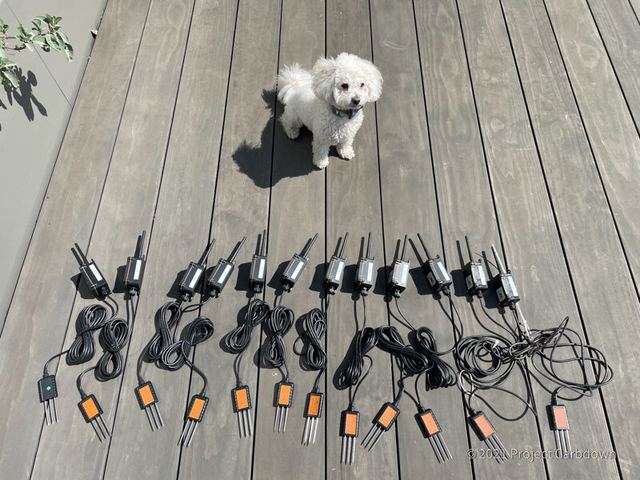
In this short paper we would like to explain why the ultimate goal of our involvement with Project Carbdown is to develop cheap, electronic sensors for measuring the weathering of rock dusts in croplands.
We recently published a long blog post with our learnings of the first year. These learnings lead to an additional, updated experiment that we will set up in early 2022, the Carbdown XXL Lysimeter Project!
Project Carbdown, our science project aimed at measuring the CO₂ sequestration by enhanced rock weathering with rock dust on croplands, has been going on for a year now. It is time to look at the results of the first year, draw some conclusions and adapt the ongoing experiments accordingly. After a short introduction this article summarizes our learnings and conclusions. These will lead to some changes to our ongoing experiments and have also triggered the development of a new, additional experiment, the “Carbdown XXL-Lysimeter Experiment” that we will announce in a few days.
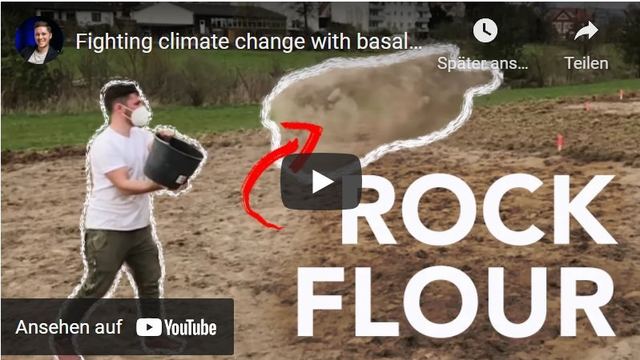
“Enhanced Weathering: What you need to know.” Youtuber Patrick Niedermayer has created a new explainer video about enhanced rock weathering!
Paessler AG has published a nice video and case-study on how we use their PRTG software to monitor soil and environmental parameters in our enhanced rock weathering experiments with basalt and olivine in several locations in Europe.
Six months ago we started working for Project Carbdown on our fields in Larissa (Greece) as well as in Fürth and in Bramstedt (Germany). This blog is our photo album of what happened since then.
Youtuber Patrick Niedermayer has created a great explainer video about enhanced rock weathering with basalt and about Project Carbdown.
Kurzbeschreibung Project Carbdown: Klimaschutz mit negativen Emissionen durch beschleunigte Verwitterung
The weathering of rock permanently binds CO₂ from the air and thus removes it from the atmosphere. Can this be used to mitigate climate change? For a few months now, we have been preparing a scientific project together with several scientists and our partner Fieldcode in which we want to accelerate and measure the weathering of rocks, in order to possibly expand the toolbox for climate protection. Today we are proud to announce: Project Carbdown.
Durch die Verwitterung von Gestein wird CO₂ aus der Luft permanent gebunden und so der Atmosphäre entzogen. Können wir damit etwas gegen den Klimawandel tun? Seit einigen Monaten bereiten wir zusammen mit einigen Wissenschaftlern und unserem Partner Fieldcode ein wissenschaftliches Projekt vor, bei dem wir Gesteinsverwitterung beschleunigen und vermessen wollen, um möglicherweise damit den Werkzeugkasten des Klimaschutzes zu erweitern. Heute stellen wir also vor: Project Carbdown.
A few days ago I had the chance to talk to Professor Dr. Jelle Bijma about the climate crisis and the enhanced rock weathering project that we are currently setting up together with several other people.
In our endeavor to enable negative emissions one of our next goals is to set up olivine based pilot projects for enhanced rock weathering together with our partner company Fieldcode. This blog article explains WHY we do this and WHAT questions we need to find answers for.